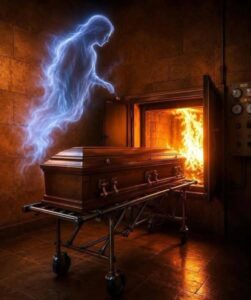
Bodies naturally change after death. They decompose, return to the elements, and may be affected by fire, water, accidents, or other circumstances. Throughout history, many people have died in situations where their remains could not be recovered or preserved.
If resurrection depended on every physical particle remaining intact, these circumstances would raise serious theological difficulties.
The Apostle Paul addresses the nature of resurrection in 1 Corinthians 15, using the image of a seed being sown and transformed. His discussion emphasizes that resurrection involves God's action and a transformation of the body.
Many Christian theologians have therefore argued that cremation cannot, by itself, prevent God from raising the dead.
Augustine of Hippo also addressed concerns about bodies destroyed or consumed after death, maintaining that such circumstances do not place resurrection beyond God's power.
For Christians who believe in the resurrection, the essential question is not whether every physical remnant survives, but whether God can fulfill the promise of new life.
Does the Reason for Choosing Cremation Matter?
For many Christians, the motive behind a decision deserves consideration.
A family might choose cremation because burial is unaffordable, cemetery space is limited, relatives live in different countries, or the deceased expressed a clear preference. Environmental concerns and cultural customs may also influence the decision.
These practical reasons are different from deliberately choosing cremation to express contempt for the body or to reject a central belief of one's faith.
Even so, Christians and churches may differ over how much weight to give motive, tradition, and personal conscience.
It is also important not to assume that someone who chooses cremation necessarily rejects the resurrection. Many believers who affirm traditional Christian teachings choose cremation for practical or personal reasons.
Funeral decisions are often made during a period of intense grief. A compassionate pastoral conversation can help families understand their beliefs without adding unnecessary guilt or fear.
 Up Next: Page 4 of 5
What Do Different Christian Churches Teach About Cremation?
Christian denominations do not all approach cremation in the same way.
Continue Reading