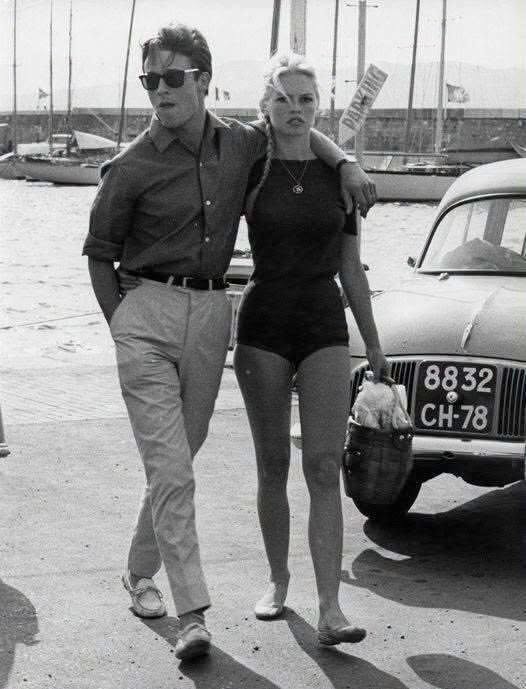
No Filters, No Editing—Look Closely at This Remarkable Photo
Brigitte Bardot and Jacques Charrier in 1958: The Romance Behind the French Riviera Glamour
In the summer of 1958, Brigitte Bardot represented far more than the image of a glamorous movie star. With her tousled blonde hair, expressive eyes, and effortlessly distinctive style, she had become a symbol of youth, freedom, and changing attitudes toward femininity. Her influence reached beyond the cinema, shaping fashion, popular culture, and the world's growing fascination with French celebrity life.
One place became inseparable from her public image: Saint-Tropez. The once-quiet fishing town on the French Riviera was emerging as an international destination for artists, actors, and fashionable travelers. Its sunlit beaches, picturesque harbor, and relaxed Mediterranean atmosphere seemed to embody the carefree sophistication that audiences associated with Bardot.
Her relationship with fellow actor Jacques Charrier would soon become another chapter in her remarkable story. Their romance, marriage, the birth of their son, and eventual separation attracted public attention, revealing a more complicated reality behind the glamorous photographs.
Looking back at Bardot and Charrier today means looking beyond the images themselves. Their story offers a glimpse into postwar French society, the rise of modern celebrity culture, and the personal challenges of living when the world believes it knows you.
Brigitte Bardot: The Woman Who Changed French Cinema
Born in Paris on September 28, 1934, Brigitte Bardot initially trained in ballet before entering the worlds of modeling and acting. Her early modeling work brought her attention in French fashion publications, helping open the door to a film career.
Bardot's appeal was distinctive. Rather than relying solely on the polished elegance traditionally associated with screen stars, she projected a more relaxed, spontaneous presence. Her expressive face, natural movement, and recognizable hairstyle helped create an image that was both glamorous and seemingly unrestrained.
By the mid-1950s, she was attracting increasing attention. Her international breakthrough came with And God Created Woman (1956), directed by Roger Vadim, her first husband.
In the film, Bardot played Juliette Hardy, a young woman whose desires and independence challenged the conservative expectations of the community around her. The movie generated controversy, but it also helped establish Bardot as an international sensation.
Her performance offered audiences a different vision of femininity: sensual, playful, independent, and resistant to conventional rules. Some viewers celebrated that image as liberating, while others considered it provocative. Either way, Bardot became a cultural figure whose influence extended well beyond the screen.
By 1958, she was no longer simply a rising actress. She had become a defining face of a changing era.
Saint-Tropez: The Riviera Town That Became a Legend
Saint-Tropez had long been a Mediterranean fishing community, but the postwar years brought a growing number of artists, writers, filmmakers, and wealthy visitors to its shores.
Its appeal was different from the formal luxury of some established resorts. Saint-Tropez offered a more relaxed atmosphere, with boats in the harbor, outdoor cafés, narrow streets, and beaches that seemed far removed from the routines of urban life.
Bardot helped bring this setting to international attention. Her association with the town reinforced an image of French glamour that was youthful, informal, and closely connected to the natural beauty of the Mediterranean.
 Up Next: Page 2 of 5
In photographs, she could appear in simple summer clothing, her hair loosely...
As magazines circulated images of famous visitors enjoying the Riviera, Saint-Tropez became more than a geographical location. It became a symbol of...
Continue Reading