As a lighthearted reflection, seeing an elephant first might inspire you to think about the importance of stability, relationships, or persistence in your life.
Still, this visual preference cannot establish that you are more loyal, wiser, or more dependable than someone who notices the snake first. Such qualities cannot be reliably measured by a single optical illusion.
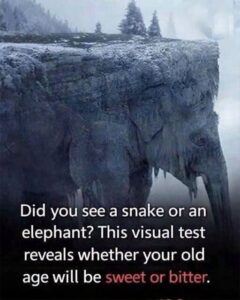
What If You See Both Animals?
Some viewers may recognize both animals quickly, while others may need to look at the image from a different angle or concentrate on different areas.
This experience illustrates how attention can shift between competing interpretations of the same visual information. You may notice one shape initially and then discover another once you know what to look for.
Rather than treating this result as proof of flexibility, empathy, or creativity, consider it an opportunity to explore how changing your focus can reveal details you initially missed.
What If You See Neither Animal?
Not everyone will identify the intended shapes immediately. The image may be unclear, the outlines may blend together, or the viewer may simply interpret the visual elements differently.
That does not mean a person is overly literal, less imaginative, or more practical than others. Differences in visual perception can arise for many reasons, including image quality, familiarity with the subject, and individual attention.
If you cannot see either animal, try looking at the image again after a short break. You may notice a new pattern, but there is no need to force yourself to identify a particular shape.
Why Can One Image Have Different Interpretations?
The phenomenon behind many optical illusions is known as ambiguous figure perception. In these images, the same visual arrangement can support more than one interpretation.
 Up Next: Page 3 of 3
Your brain uses visual cues, prior experience, attention, and context to make...
This is one reason optical illusions are popular in educational activities and entertainment. They offer a simple way to explore visual perception...
Continue Reading