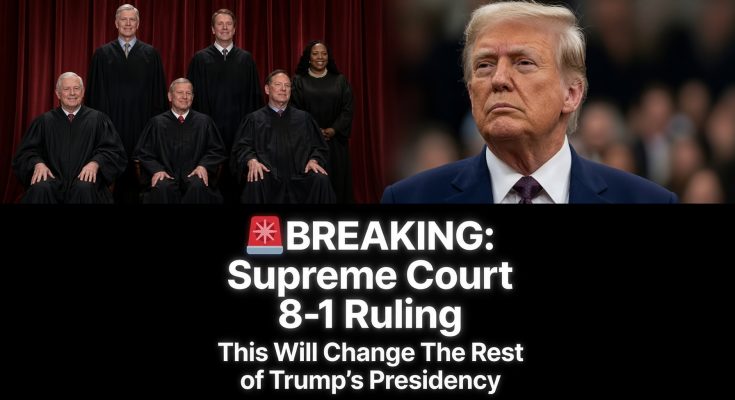
Supreme Court’s 8–1 Ruling Involving Trump Sparks Questions Across Washington
The U.S. Supreme Court has narrowed the ability of foreign plaintiffs to bring certain human rights lawsuits in American courts, ruling that federal judges cannot create new claims under the Alien Tort Statute and that the Torture Victim Protection Act does not authorize aiding-and-abetting liability.
In a 6–3 decision issued June 23, 2026, in Cisco Systems, Inc. v. Doe, the Court reversed a lower court ruling involving allegations that Cisco Systems helped Chinese authorities identify and persecute practitioners of Falun Gong through surveillance technology. The allegations were claims made by the plaintiffs, not findings that Cisco had committed the alleged abuses.
What the Supreme Court Decided
The case centered on two federal laws frequently cited in lawsuits involving alleged human rights violations.
The Alien Tort Statute (ATS) allows foreign nationals to bring certain civil claims in U.S. federal court for torts committed in violation of international law. The Supreme Court held that federal courts may not create new causes of action under the statute for alleged violations of international norms.
The Torture Victim Protection Act (TVPA) provides a civil remedy against individuals who subject others to torture or extrajudicial killing. The Court concluded that the law does not extend to aiding-and-abetting liability because Congress did not expressly provide for that form of liability in the statute.
The Allegations Against Cisco
The plaintiffs, practitioners of Falun Gong and people connected to victims, alleged that Chinese authorities persecuted them because of their religious beliefs. They claimed Cisco developed surveillance technology that helped authorities identify, track, and apprehend practitioners.
Their lawsuit argued that Cisco and two company executives could be held liable for allegedly aiding and abetting violations of international law. One plaintiff also brought a claim under the Torture Victim Protection Act against the executives.
Cisco disputed the legal basis for the claims. The case reached the Supreme Court after the Ninth Circuit Court of Appeals allowed parts of the lawsuit to proceed.
 Up Next: Page 2 of 2
Why the Decision Matters
The ruling limits one route through which foreign plaintiffs have sought compensation in U.S. courts for alleged human rights abuses involving corporate...
Continue Reading