As the images spread, theories multiplied. Some suggested the form was an illusion—a case of slime mold or fungal growth conforming around buried debris, tricking the brain into seeing a humanoid shape. Others proposed a parasitic organism overtaking a small animal, distorting its remains into something grotesquely unfamiliar. Each hypothesis tried to pull the object back into the realm of known science, but none fully satisfied.
Despite thousands of views and countless opinions, no definitive answer emerged. The strange figure became a symbol of how modern curiosity works: when confronted with something uncanny, we crowdsource meaning, bouncing between expertise, imagination, and fear. What began as a quiet morning discovery transformed into a global guessing game involving scientists, skeptics, and believers alike.
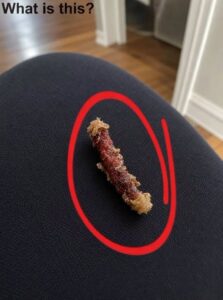
The object itself remains unexplained. It could be an extreme biological oddity, a prank gone too far, or a coincidence shaped by decay and perception. Until someone collects a sample and submits it to laboratory analysis—carefully, and with gloves—the truth remains out of reach.
What this episode ultimately reveals is how fragile our sense of familiarity really is. Even in carefully maintained backyards, the unknown can surface without warning. The internet may offer endless theories, but not every mystery yields to immediate answers. For now, the homeowner watches from a distance, waiting to see whether the strange form will wither away—or whether it has more secrets still rooted
 Read Next Story →
I Woke Up in the Middle of the Night Convinced Something Was Biting My Skin—and the Truth Was Hilariously Embarrassing
More Stories You May Like
See More →


Odette is the one who sees a headline about an unusual wildlife report at 7am and has 900 words on it by lunch. She's a generalist in the best sense: endlessly curious, fast, and allergic to dull writing.
More from Odette →