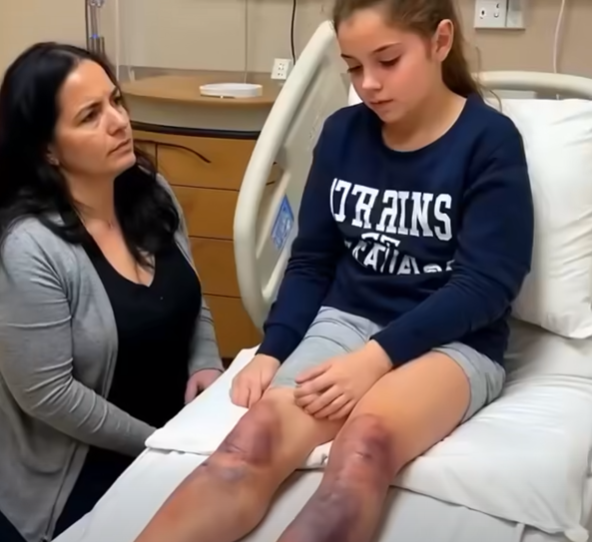
The phone call came on an ordinary weekday, the kind filled with routine tasks and small distractions. I assumed my fifteen-year-old daughter, Sophie, was calling to share something lighthearted from a family trip she was on without me. Instead, her face appeared tense and exhausted, and she quietly told me she was in pain.
She explained that she had been injured the day before but was encouraged to keep going despite repeatedly saying she couldn’t walk comfortably. By the following morning, she had been left alone in a hotel room in another state while the rest of the group went out. Listening to her describe the situation, I realized something was seriously wrong.
I made a decision I had avoided for years: I booked a flight immediately.
Seeing the Reality
When I arrived, Sophie looked relieved but unsure, as if she hadn’t fully believed help would come. Seeing her injury in person confirmed what I feared — it was far more serious than anyone had acknowledged. We went straight to the emergency room, where doctors determined she had a fracture that required proper care and rest.
While speaking with medical staff, Sophie explained that the injury had happened during a moment of rough behavior that others had dismissed as a joke. Her pain hadn’t been taken seriously, and she had been made to feel responsible for “causing trouble” simply by speaking up.
Confronting a Pattern
That night, I addressed the situation directly with my family. Their responses focused on minimizing the incident and criticizing me for reacting strongly. But evidence later confirmed Sophie’s account, and the matter moved into a formal review process.
What followed was difficult but necessary. Authorities evaluated the situation, and appropriate consequences were applied. I was accused of being harsh and of “breaking the family apart,” but I understood something clearly: protecting my child mattered more than preserving harmful silence.
Healing and Moving Forward
Sophie recovered steadily, both physically and emotionally. One evening, she quietly told me she was grateful I hadn’t asked her to ignore what happened. “I just needed someone to believe me,” she said.
That moment stayed with me.
This experience wasn’t about blame or retaliation. It was about safety, accountability, and ending a cycle where pain is dismissed instead of addressed. Today, when Sophie and I travel together, I still feel protective — but I also feel certain.
If she ever needs me again, I will always show up.