
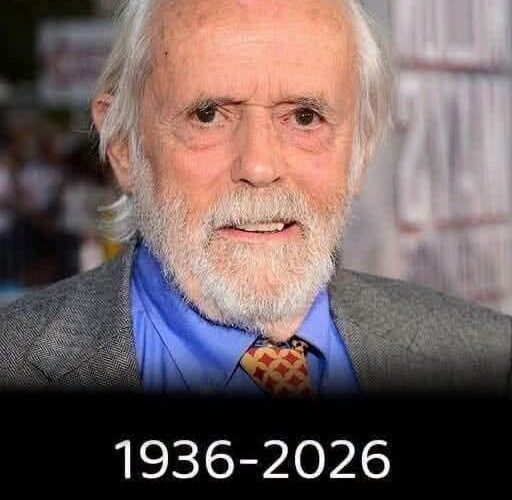

The Actor Behind the Familiar Face
Clark was born in Washington, D.C., in 1936.
Before establishing himself in film and television, he developed his craft through theater. His early work included stage productions in New York and Off-Broadway performances before he moved into screen acting.
His career eventually included more than 120 acting credits across film and television.
That range is one reason his work remained recognizable to so many audiences.
He could appear in a Western one year, a television drama another, and a completely different kind of film later in his career.
A Natural Fit for Westerns
Clark became particularly associated with Westerns.
His rugged appearance and understated acting style made him a natural fit for stories set in frontier towns, ranches and remote communities.
Among his film credits were Jeremiah Johnson, The Life and Times of Judge Roy Bean, The Outlaw Josey Wales and The Cowboys. He worked alongside major stars including Clint Eastwood and John Wayne during his career.
But Clark’s work was never limited entirely to the Western genre.
His filmography eventually expanded into comedies, dramas, television series and other productions.
That versatility allowed him to remain active through several different eras of Hollywood.
The Role Many Viewers Remember
For a different generation of moviegoers, Clark may be especially recognizable as the bartender in Back to the Future Part III.
The 1990 film transported Marty McFly and Doc Brown back to the Old West, giving Clark the opportunity to return to a setting that had already become an important part of his career.
His role was supporting, but it was exactly the kind of performance at which Clark excelled: memorable without demanding the spotlight.
That ability to make a relatively small role feel authentic was one of his strengths.
More Than Westerns
Clark’s television career was equally extensive.
He appeared in programs including Bonanza, Little House on the Prairie, Dynasty, Magnum, P.I., Walker, Texas Ranger and Chicago Hope.
He also had recurring roles on Grace Under Fire and The Jeff Foxworthy Show.
For viewers who grew up watching television during different decades, his face could therefore turn up in many unexpected places.
You might not immediately remember the character’s name.
But you could recognize the actor.
That is one of the unusual marks of a successful character performer.
A Career Built on Craft
Clark’s family described him as an “actor’s actor,” emphasizing his appreciation for the work itself rather than celebrity.
That description fits the kind of career he built.
He wasn’t dependent on playing the lead.
Instead, he helped create the worlds surrounding the central characters.
A Western town needs its townspeople.
A saloon needs its bartender.
A television drama needs believable people who make the fictional world feel real.
Character actors provide that foundation.
Their performances may last only a few minutes in a particular production, but those moments can help make a story memorable.
A Career That Spanned Generations
One of the most remarkable aspects of Clark’s career was its longevity.
He began appearing on screen in the late 1950s and continued working for decades. His final film role came in the 2014 Western A Million Ways to Die in the West, bringing his career back to a genre that had been so important to him.
Few performers are able to maintain such a long connection with audiences while working across so many different productions.
Clark managed to do exactly that.
Remembering Matt Clark
Matt Clark’s passing is a reminder that Hollywood history isn’t made only by its biggest stars.
It is also built by the performers who appear in supporting roles, return year after year, and help make fictional worlds believable.
Clark was one of those performers.
Whether audiences remember him from a classic Western, a television series, or his appearance as the bartender in Back to the Future Part III, his work remains part of the films and programs that generations of viewers have enjoyed.
He may not always have been the first name people remembered.
But once they saw his face, many knew they had seen him before.
And that may be one of the clearest signs of the lasting impact of a great character actor.
Matt Clark leaves behind a body of work spanning more than half a century—and countless familiar moments that will continue to bring his performances back to audiences.