The deeper investigators looked, the more complicated the network appeared.
The investigation eventually focused on a heavily secured private compound isolated from ordinary transportation routes.
What had looked from a distance like another luxury estate now appeared to investigators to warrant much closer scrutiny.
The Island Reveals Its Secrets
In the story, authorities eventually obtained the necessary legal authorization to search the property.
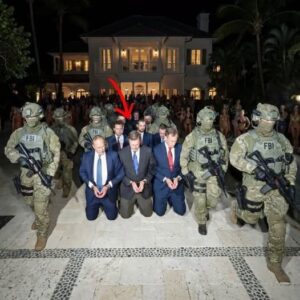
The operation began before sunrise.
Specialized teams approached the compound while much of the island remained covered in mist.
Inside, investigators allegedly discovered evidence that transformed the case from a troubling disappearance investigation into something far larger.
Hidden rooms.
Security systems.
Records.
And digital files documenting what authorities believed were organized acts of violence.
The most disturbing discovery was evidence suggesting that the alleged “hunts” had been recorded and preserved for private viewing.
The island had not merely concealed its victims.
It had concealed an entire system.
A Network Bigger Than One Person
The alleged mastermind, a wealthy entrepreneur who had treated the remote property as a private kingdom, was reportedly among those targeted by investigators.
Authorities also began examining the roles of other people connected to the operation.
The fictional case raises a disturbing question:
What happens when immense wealth, isolation, technology, and secrecy are combined?
A remote location can make ordinary oversight difficult.
Money can create layers of companies, properties, employees, and intermediaries.
Technology can protect people just as easily as it can expose them.
But none of those protections are absolute.
Investigators in the story use the same tools that once helped conceal the operation—satellite imagery, financial analysis, digital forensics, and surveillance technology—to begin dismantling it.
Katia's Escape Becomes the Turning Point
Katia's greatest contribution to the investigation was not a piece of technology.
It was her memory.
 Up Next: Page 3 of 3
She remembered details.
Routes.
Continue Reading