Later, Lily slipped quietly to her grandmother inside the house. She stood at the bathroom doorway, fingers clenched, voice barely audible.
“Can I stay with you?”
The grandmother closed the door gently. Outside, the backyard noise faded, replaced by a heavy stillness.
“What’s wrong, Lily?”
The little girl hesitated. “I don’t want to show my tummy.”
“Why, honey?”
Lily’s lip trembled. “Daddy says it’s bad if I tell.”
The grandmother’s hands went cold. She knelt and lifted the hem of Lily’s dress just enough to see—and the world shifted. Dark bruises, finger-shaped marks, some fading, some frighteningly fresh.
She didn’t gasp. She didn’t cry. Something steadier, fiercer, took over.
“Who did this?” she asked.
Lily’s voice was flat, practiced. “Daddy grabs when I don’t listen. Mommy says it’s love and I have to be good.”
It wasn’t just harm. It was conditioning. Pain disguised as affection, silence taught as safety.
The grandmother held Lily close, careful not to hurt her, and made a decision that would fracture the family forever. No confrontation. No shouting. No waiting.
She moved Lily to the guest room, locked the door, and told her she was safe. Then she called Child Protective Services, describing the bruises, the fingerprints, the fear. She called the police next.
When Ryan realized Lily was missing, he stormed into the house, voice raised, footsteps heavy.
“You’re not touching her,” her grandmother said, calm and immovable.
“She’s my child,” he snapped.
“And she’s hurt,” she replied. “You don’t get to decide what happens next.”
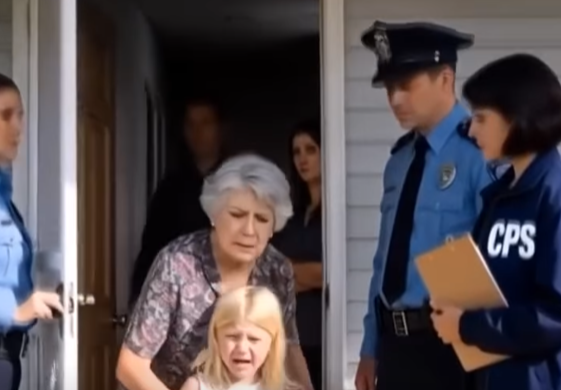
The knock at the door was sharp. Law enforcement arrived, followed by a caseworker. Backyard laughter froze. Neighbors watched as Lily’s injuries were documented and her parents separated for questioning.
By nightfall, emergency custody was granted. Lily and Leo stayed. Their parents left. Ryan’s final look carried something dark and bottomless—but it didn’t matter.
The house felt different after that. Quieter. Heavier. Safer.
That night, Lily slept curled against her grandmother, waking from nightmares but always finding steady arms waiting. Leo clung close too, unsure why Mommy and Daddy weren’t there. The grandmother told him only what was needed: everyone needed time to rest.
In the following days, the truth unfolded through professionals. Evidence spoke. Denial crumbled. The grandmother became a fortress—quiet, deliberate, unstoppable. Doctor visits, therapy, court hearings, school meetings—all handled with measured words that carried weight.
Most importantly, she began the slow work of rewriting what love meant for her grandchildren:
Love doesn’t hurt.
Love doesn’t scare you.
Love doesn’t demand silence.
There were setbacks. Flinches returned. Tears came unbidden. Leo stayed close, protective. Healing wasn’t neat—but it was real.
One day, Lily asked to swim again. Together, they stepped into the pool. No pressure. No yelling. Just sunlight, water, and quiet freedom.
That’s when her grandmother made a vow—not out loud, not for applause.
This ends with me.
The pattern. The silence. The pretending.
Her children would know a different family: one where care means protection, authority means responsibility, and love shows up even when inconvenient or costly.
The party that should have sparkled ended in broken relationships—but also marked the start of something stronger.
A home built on safety.
Trust, not fear.
Truth, not silence.
And that was worth everything.
If this story moved you, take a moment to share it—because raising awareness can make a difference. Comment below and let’s talk about protecting the most vulnerable in our lives.