 Curious & Viral
The Strange Item From the Market That Left Everyone Guessing-
Sometimes, the most ordinary trip to a market can leave you with a question you can't easily answer.
That was exactly what happened when a shopper came across a small, unusual-looking item with no obvious explanation. There was no detailed label, no clear instructions, and nothing about its appearance that immediately revealed what it was meant for.
At first, it seemed simple.
Then people started looking more closely.
An Item That Didn't Look Familiar
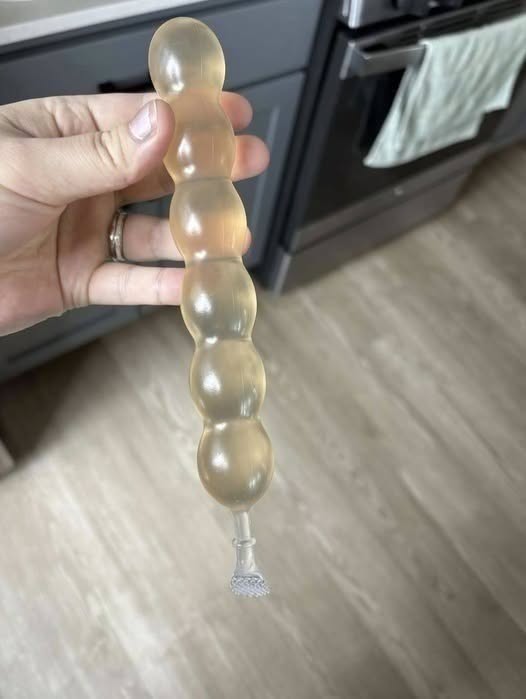
The object had an unusual shape and texture.
It appeared somewhat soft but firm enough to hold its form. Its surface looked slightly translucent, while the segmented design made it even harder to identify.
Was it something edible?
Was it an ingredient?
Or was it an everyday item designed for an entirely different purpose?
Without context, almost anything seemed possible.
The Guessing Began
As people examined it, different theories started appearing.
Some thought it might be a type of food sold in certain regional markets. Others wondered whether it was connected to cooking or food preparation.
A few people weren't convinced it was food at all.
The problem was that appearance alone wasn't enough to provide a reliable answer.
And that's where the mystery became interesting.
Why Unfamiliar Market Items Can Be Confusing
Markets often bring together products from different regions, cultures, and culinary traditions.
An item that seems completely ordinary to someone familiar with it can look mysterious to someone seeing it for the first time.
Packaging, language, local customs, and preparation methods can all provide important clues.
Remove those clues, and even a common product can become surprisingly difficult to identify.
 Up Next: Page 2 of 2
Looks Can Be Misleading
One reason these objects generate so many guesses is that people naturally try to compare unfamiliar things with objects they already know.
Continue Reading