 Curious & Viral
The Strange Kitchen Tool Grandma Recognized Immediately—But Younger Generations May Never Have Seen It
A teenager noticed something unusual sitting on his grandmother’s kitchen shelf.
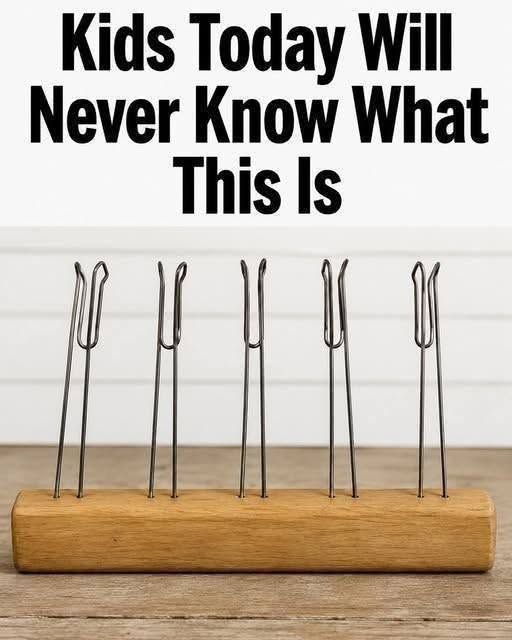
It was made from wood and metal, with several narrow rods or loops arranged in a way that seemed oddly deliberate. It didn’t look like a modern kitchen appliance, and it certainly didn’t resemble ordinary decoration.
Naturally, he had one question: What was it used for?
His grandmother recognized it almost immediately.
To her, the strange-looking object was simply an old-fashioned kitchen rack—a practical household accessory designed to give damp towels, dishcloths, or other small linens a place to hang and dry.
A Simple Idea That Made Everyday Tasks Easier
Before modern kitchens became filled with specialized storage systems and appliances, many household tools relied on remarkably simple designs.
A rack with several separate arms or rods allowed cloth items to hang individually instead of being piled together. Separating the fabric gave air more room to circulate and made it easier for towels to dry between uses.
Vintage examples of wooden and metal towel racks can still be found today, including designs with several swinging arms or individual hooks intended for kitchen towels and other linens.
There was no complicated mechanism.
No electricity.
Just a straightforward solution to an everyday problem.
Why These Objects Can Look So Mysterious Today
Household technology has changed dramatically over the decades.
Many objects that were once familiar parts of a kitchen have gradually disappeared as homes adopted newer storage solutions, disposable products, and more specialized equipment.
That creates an interesting generational gap.
A grandparent might look at an old kitchen rack and immediately remember where it was mounted and what belonged on it. A younger person, seeing the same object for the first time, might have absolutely no idea what it does.
 Up Next: Page 2 of 2
That doesn't necessarily mean the older tool was better. It simply reflects...
One reason vintage household tools remain interesting is their emphasis on function.
Continue Reading