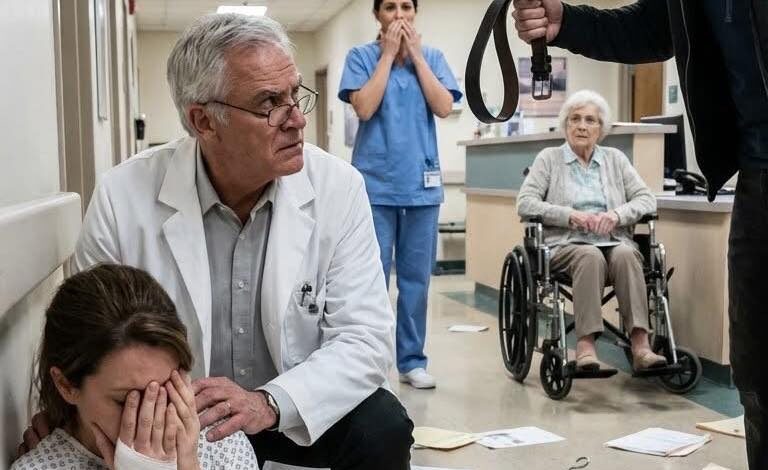
Only hours earlier, that same hand had caused the injuries that brought me there.
“Stay with me,” he said gently. “The doctors said you fell. I was so scared.”
A fall. The story was already in motion.
I couldn’t speak properly. My throat was sore, my face swollen, my body stiff and fragile. I kept my eyes on the ceiling because looking at him felt unsafe—not because he would hurt me there, but because his calm expression was familiar. He had mastered it. The loving face. The concerned one. The version that made others doubt what they were seeing.
A nurse entered the room to check my IV. Instantly, his posture shifted. His voice trembled just enough.
“How is she?” he asked.
“She’s stable,” the nurse replied.
He nodded, thanking her, saying how much I meant to him. I wanted to tell her everything, but fear kept me silent. I had learned what happened when I spoke out and wasn’t believed.
When the nurse left, his tone changed. “Rest,” he said. Not as a suggestion—but as a command.
Then the door opened again. This time, it was a doctor who didn’t follow the script. He looked at me carefully, not at the man beside me.
“Sir,” the doctor said, “I need you to step outside while I complete an assessment.”
My husband resisted briefly, then complied when security arrived. Before leaving, he squeezed my hand and promised he’d be nearby.
Once the door closed, the room felt different. Safer.
The doctor spoke quietly. He explained that my injuries didn’t match the explanation given. Some showed signs of having happened at different times. He looked at me and said, “If you tell me what really happened, we can help protect you. But I need you to say it.”
Fear surged—but something else rose with it. Determination.
“He did this,” I said.
Everything changed after that.
How It Began
I met him years earlier at a wedding. He was attentive, thoughtful, and calm. He remembered details about me. He made me feel valued. Friends admired him. My family trusted him.
The early years felt like love. Gradually, though, concern turned into control. He questioned my choices, my time, my relationships—always framed as care. If I disagreed, he withdrew affection until I apologized. I thought it was compromise.
It wasn’t.
The first incident was followed by apologies and promises. I hid the evidence. I accepted the gifts meant to make things feel normal again. Over time, the pattern repeated. My world became smaller. My confidence faded. He took control of money and decisions. I began to believe the worst things he said about me.
I tried to leave once. It didn’t work. After that, I focused on getting through each day.
Until one day, things escalated beyond anything before.
The Turning Point
I was taken to the hospital, where he calmly repeated the story we were supposed to tell. But someone noticed what didn’t add up. One question was asked—and I answered honestly.
The investigation followed. Then the arrest. Then the trial.
He tried to shift blame and rewrite the story, but evidence and testimony spoke clearly. I told the truth without embellishment.
The verdict was guilty.
Life After
Two years later, my life is quieter—and stronger. I moved. I changed my name. I rebuilt at my own pace. I work with children now, helping those who carry fear too early in life.
Healing hasn’t been simple. Some scars remain, visible and invisible. I still startle at loud sounds. Some days are harder than others.
But I wake up free.
And that freedom—hard-won and deeply valued—is everything.