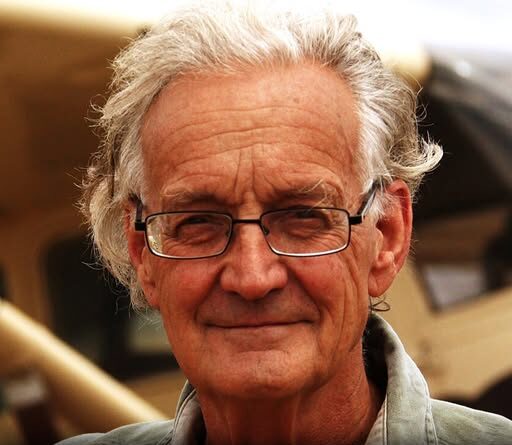
The world often pauses to grieve famous faces—actors, musicians, political leaders—but far less often do we stop to honor those who quietly reshape humanity’s relationship with the planet itself. This week, that silence felt heavier. The global conservation community is mourning the loss of Iain Douglas-Hamilton, a man whose life’s work transformed how humans understand, protect, and coexist with elephants.
Douglas-Hamilton passed away at 83 in his home in Nairobi, leaving behind not just a grieving family, but a profound absence in wildlife conservation and environmental science. To describe him simply as a zoologist would miss the point. He was a pioneer, a fearless field researcher, a truth-teller, and above all, a bridge between the human world and the natural one.
Before his work, elephants were often viewed as icons or commodities. After him, they were recognized as sentient beings—intelligent, emotional, and deeply social, capable of memory, grief, and decision-making. Douglas-Hamilton didn’t just study elephants; he changed the way the world saw them.
Tributes poured in from across the globe. Prince William remembered him as a man whose dedication to conservation left an enduring impact, recalling time spent together in Africa as deeply formative. Conservation leaders echoed that sentiment, calling him a legend whose influence will shape wildlife protection for generations to come.
Born in 1942 into an aristocratic family in Dorset, England, Douglas-Hamilton could have chosen a life of comfort. Instead, he chose dust, danger, and devotion to the wild. After studying biology and zoology in Scotland and at Oxford, he moved to Tanzania in his early twenties, settling near Lake Manyara National Park. What began as academic research soon became a lifelong mission.
Continue reading on next page…