The landing was brutal but deliberate. The aircraft protested, but it held. When the engines finally spooled down, silence rushed in. Raina stayed seated for a moment, heart steady, fear postponed as it always was.
Outside, the base erupted—medics, mechanics, fire crews converging. The base commander approached, already forming his reprimand.
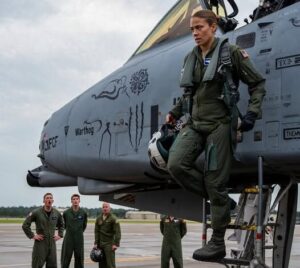
Then he saw the emblem.
His posture shifted instantly. You don’t question the Kraken. You secure the asset. You make calls.
The Silver Kraken wasn’t a unit—it was a doctrine. A classified designation for pilots authorized to operate beyond conventional limits when strategic failure was imminent. No press. No ceremonies. No public acknowledgment. Only outcomes.
Raina climbed down without comment. No excuses. No bravado. When questioned about ignoring diversion orders, she answered calmly. She had prevented enemy aircraft from tracking her back over friendly forces. She had preserved the mission. The aircraft was intact.
“That’s why I didn’t crash,” she said simply.
Within the hour, encrypted calls were placed. Old files were reopened. A general rerouted his flight.
Brigadier General Alan Morrison arrived before sunset.
In a packed briefing room, he played footage few had ever seen—night-vision recordings from conflicts long scrubbed from official history. A helicopter holding off overwhelming odds. An aircraft pushed beyond tolerance. A voice on comms, steady when others fractured.
“This pilot saved forty-four lives in Syria,” Morrison said. “Alone. She declined every commendation. Asked only to keep flying.”
Silence filled the room.
He pinned a Distinguished Service Cross to her flight suit anyway. Not for publicity, but for the record that mattered—the one carried by those still alive.
From that day on, the base changed. Quietly.
Jokes stopped. Crew chiefs noticed how she stayed late to solve problems outside her assignment. Medics noticed how she sat with injured soldiers long after her shift ended. Younger airmen began asking questions that had nothing to do with tactics.
 Up Next: Page 3 of 3
“How do you keep going when no one notices?”
“You don’t do it to be noticed,” she said. “You do it because it needs doing.”
Continue Reading