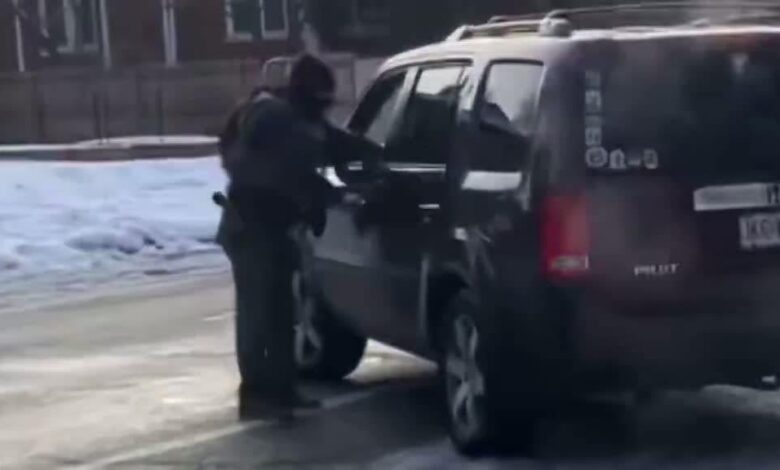
Federal officials quickly framed the shooting as justified, claiming Good used her vehicle as a weapon. Local authorities, eyewitnesses, and video footage challenge that account, showing her attempting to pull away rather than aggressively confront the agents. The tension between federal and local perspectives has sparked sharp criticism from Minneapolis leaders. Mayor Jacob Frey and Governor Tim Walz accused ICE and the Department of Homeland Security of opacity, contradictions, and exclusion of local investigators, framing the federal narrative as misleading.(TIME)
The political debate has intensified nationally. Vice President J.D. Vance defended the agent’s actions, blaming “far-left rhetoric” for creating unsafe conditions for federal officers, while critics argue this framing only heightens public tension. Minnesota, alongside Minneapolis and St. Paul, filed a lawsuit against the federal government, claiming the immigration operation violated constitutional rights and undermined local authority.
Protests have continued in Minneapolis and beyond, reflecting the nation’s deep division. Thousands have marched against federal immigration enforcement, while supporters of law enforcement view the backlash as an attack on the rule of law. Videos circulating online have fueled conflicting interpretations, showing Good both fleeing and appearing compliant under stress.
Homan’s central warning is clear: don’t let outrage replace evidence, and don’t let fear replace due process. He urges Americans to resist rushing to judgment until investigators complete their work. Advocates for this approach emphasize that premature condemnation undermines trust in institutions and complicates the search for truth. Critics counter that systemic issues of unaccountable force require public scrutiny — and caution should not become a shield for wrongdoing.(Yahoo News)
The Minneapolis shooting has become more than a single tragedy. It has evolved into a symbol of broader societal tension: accountability versus authority, emotional reaction versus rule of law. How the nation interprets and reacts to this event will shape the ongoing conversation about policing, federal enforcement, and justice in America.(Wikipedia)
What do you think — should public outrage drive action, or should investigators be allowed to handle cases first? Share your thoughts in the comments below.