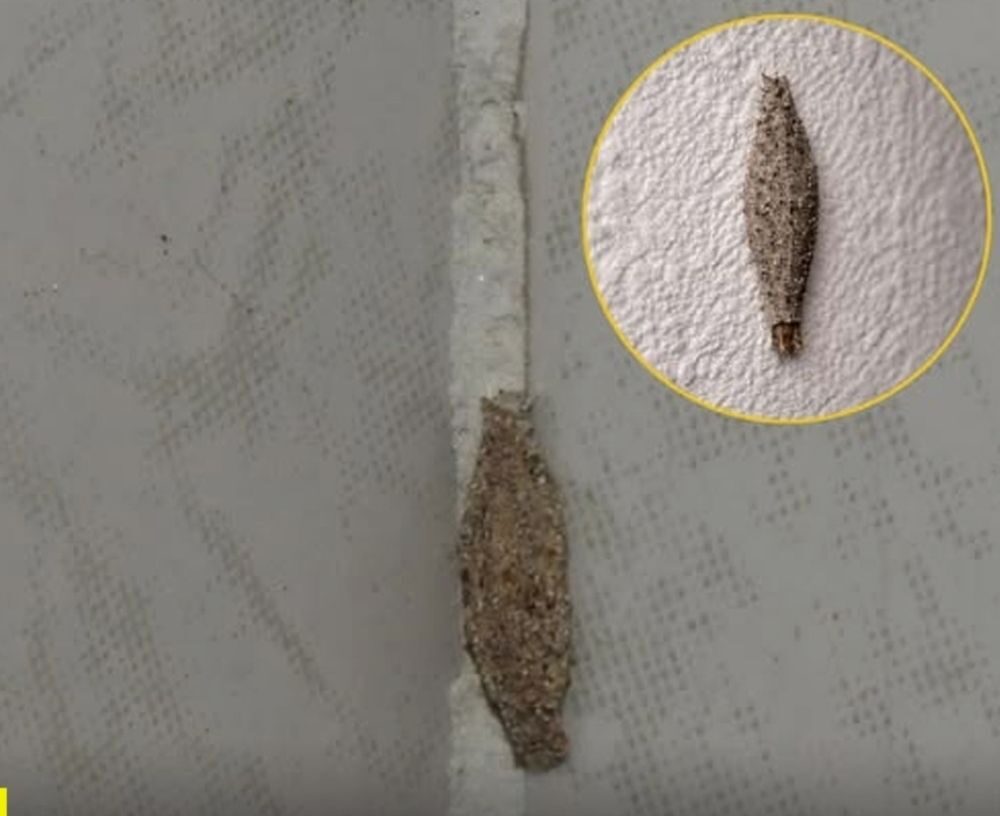
Because bagworms are small and well-camouflaged, they often go unnoticed until infestations become obvious.
Signs of an Infestation
Even if you don’t spot the insects themselves, you might notice:
- Small, hanging cocoons resembling tiny pieces of dust, debris, or lint.
- Accumulated debris along walls, in corners, or behind furniture.
- Unexplained damage to fabrics, especially natural fibers.
How to Prevent Bagworms
The key to controlling bagworms is making your home less inviting:
- Reduce humidity: Bagworms thrive in damp environments, so use dehumidifiers or improve ventilation in basements, bathrooms, and laundry areas.
- Regular cleaning: Dust, vacuum, and wipe down surfaces frequently, paying attention to corners, wardrobes, and fabric-heavy areas.
- Monitor fabrics: Keep clothes, linens, and upholstery clean, especially in storage.
- Seal entry points: Check window frames, door edges, and vents for small gaps that insects can enter through.
- Declutter: Less clutter means fewer hiding places for these crafty insects.
Why It Matters
While bagworms are not harmful to humans or pets, a small infestation can quickly grow if left unchecked. By taking preventive steps, you can protect your home, maintain healthier air quality, and avoid the frustration of discovering hidden cocoons in your fabrics or corners.
Bagworms may be tiny, but their ability to hide is impressive—and your proactive approach can make all the difference.
Top Spots Where This Common Insect Hides in Your Home
Stay vigilant, clean regularly, and protect your home! Share these tips with friends and family to help them keep their spaces bagworm-free too.