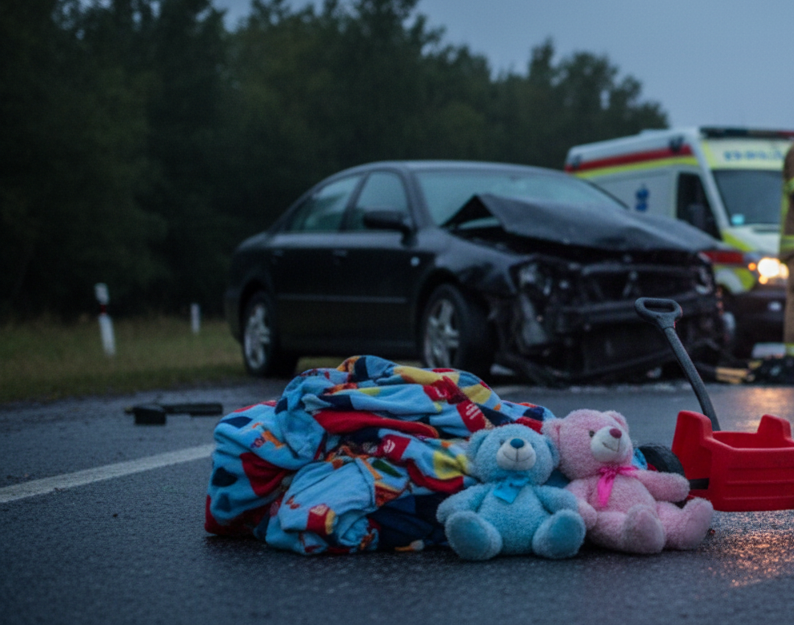
Support came slowly. Neighbors left meals. Friends handled paperwork. Teachers, strangers, coworkers—quiet gestures, unasked-for help that reminded them they weren’t alone. Vigils were held. Candles flickered. Names were spoken aloud, refusing to become statistics.
Life continued, though the parents felt frozen in disaster. Conversations blurred. Decisions overwhelmed. Anger, numbness, guilt—they carried it all, invisible to the world outside their home.
And yet, they survived. Survival brought its own pain: breathing felt unfair, waking felt wrong. The question no one can answer haunted them: why us?
Months passed. The community didn’t fix the loss, but it held space. Fundraisers appeared. Childcare offered. Check-ins continued. Love remained, steady, without judgment, even when grief returned in waves.
The children were small, but their absence loomed large. Birthdays, first school days, laughter, apologies—all that would never come—cast a shadow on every moment.
Over time, the parents learned that remembering didn’t mean reliving the crash. It meant honoring the lives that existed, celebrating the joy, the love, the brief years that mattered. Love doesn’t vanish when life does.
The road remains. Cars still pass. But for this family, it is sacred ground—the place where everything changed, where resilience and heartbreak coexist, and where a community proved that sometimes, holding what’s left is all you can do.
✨ If this story moved you, share your thoughts in the comments and honor the lives touched by tragedy.