 Health
What Can Cause Severe Sores on the Legs?
Understanding the Possible Causes
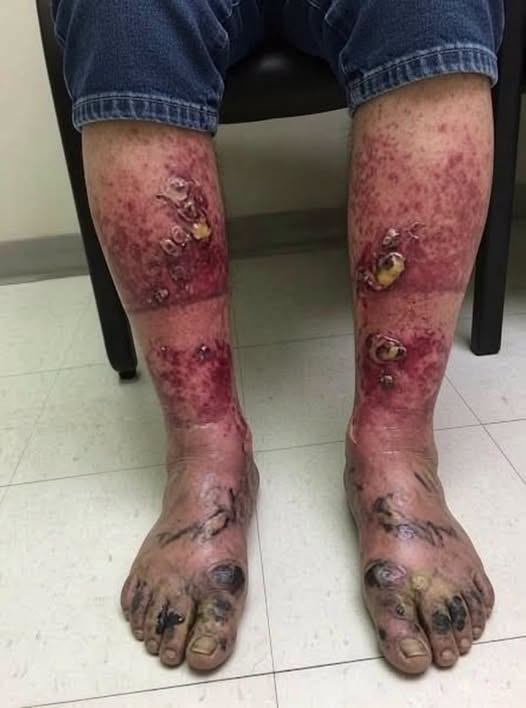
A few small red patches on the legs might initially look like minor irritation.
But when redness is followed by increasing swelling, pain, discoloration, drainage, or open sores, the situation can be much more concerning.
Severe skin changes can have many possible causes, and the appearance of a wound alone usually isn't enough to determine what caused it.
When a Skin Problem Gets Worse
Skin irritation can develop for many reasons.
A person might experience an allergic reaction, insect bite, irritation from a product, an inflammatory skin condition, or an injury.
Sometimes, however, damaged skin can become infected.
An infection may cause symptoms such as increasing redness, warmth, swelling, tenderness, or drainage. In some cases, people may also develop fever or feel generally unwell.
The speed at which symptoms develop can also be important.
A wound that is becoming noticeably worse rather than better deserves medical attention.
Timing Doesn't Always Reveal the Cause
In some situations, a person may notice symptoms shortly after a particular event and naturally assume the two are connected.
For example, someone might develop a skin problem after traveling, exercising, changing a personal-care product, or having intimate contact.
But timing alone does not establish causation.
Many unrelated conditions can appear around the same time, and determining the actual cause may require a medical history, physical examination, and sometimes laboratory testing.
This is particularly important with sores or lesions that are painful, spreading, or difficult to explain.
Possible Causes of Leg Sores
There isn't one universal explanation for severe sores on the legs.
Potential causes can include:
- Bacterial or other infections
- Skin injuries or repeated irritation
- Inflammatory skin conditions
- Allergic or contact reactions
- Insect bites that become infected
- Circulation problems
- Certain chronic medical conditions
- Medication-related reactions
- Other less common disorders affecting the skin or blood vessels
Because these conditions can look similar in photographs, professional evaluation is often necessary.
When Infection Is a Concern
A bacterial skin infection can sometimes develop when bacteria enter through a break in the skin.
A small scratch, cut, blister, or irritated area may provide an opening.
Warning signs can include redness that continues to spread, increasing warmth or swelling, significant tenderness, pus or other drainage, or fever.
 Up Next: Page 2 of 2
Some infections can progress quickly, so worsening symptoms shouldn't simply be ignored.
A person should consider prompt medical evaluation if a skin wound is rapidly changing or becoming more painful.
Continue Reading