
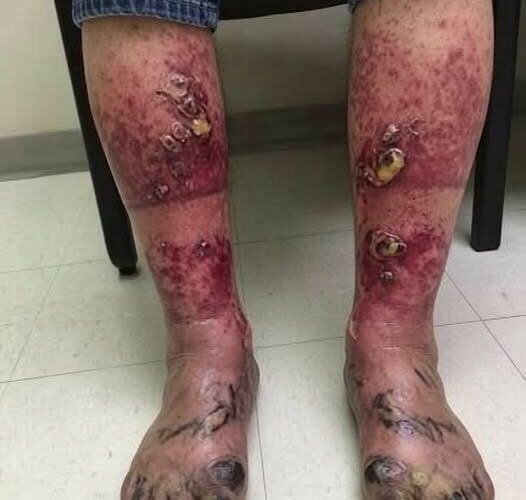

Eventually, the skin began to break down.
This kind of progression is a reminder that persistent or worsening skin changes shouldn’t automatically be dismissed as simple irritation.
What Is a Leg Ulcer?
A leg ulcer is an open sore that takes significantly longer than a normal minor wound to heal.
Venous leg ulcers are the most common type. They can develop when problems with the veins cause increased pressure in the lower legs, gradually damaging the skin and making it more vulnerable to injury.
Other ulcers can have different causes, including reduced arterial blood flow, diabetes, inflammatory conditions, or previous injury.
That is why two sores that look similar may require completely different approaches.
Problems With Vein Circulation
One common cause is poor function of the veins in the legs.
Healthy veins help return blood toward the heart. When the valves inside the veins don’t work properly, blood can pool in the lower legs and increase pressure within the veins.
Over time, that pressure can contribute to swelling and skin damage.
Varicose veins, limited mobility, previous deep-vein thrombosis, and some previous leg injuries can increase the risk of venous ulcers.
Reduced Arterial Blood Flow Can Also Matter
Not every leg sore is caused by veins.
Arterial ulcers can occur when the arteries supplying the legs become narrowed or otherwise fail to deliver enough blood to the tissues.
Because treatment depends on the type of circulation problem involved, healthcare professionals may check blood flow with tests such as an ankle-brachial pressure measurement or Doppler assessment.
This is one reason self-diagnosing a persistent wound can be risky.
Diabetes Is Another Possible Factor
Diabetes can increase the risk of ulcers, particularly on the feet.
High blood sugar can contribute to circulation problems and nerve damage, which may make injuries harder to notice or heal.
A sore that doesn’t appear to be improving therefore deserves attention, especially when someone has conditions that can affect circulation or sensation.
Sometimes Infection Makes Things Worse
A wound can also become infected.
Increasing pain, warmth, swelling, discharge, unpleasant odor, or fever can be warning signs of infection. Cellulitis, a bacterial infection affecting deeper layers of the skin, commonly occurs on the lower limbs and can become serious if treatment is delayed.
These symptoms shouldn’t be ignored.
If someone develops rapidly worsening pain and swelling, feels very unwell, develops a high fever, becomes confused or dizzy, or notices other severe symptoms, urgent medical attention may be necessary.
Why the Cause Isn’t Always Obvious
One of the most important points is that a photograph cannot reliably reveal the underlying cause of a leg sore.
Several different conditions can produce redness, swelling, discoloration, or an open wound.
Doctors may consider a person’s medical history, circulation, medications, previous injuries, mobility, and other symptoms before deciding what investigations are appropriate.
For example, a Doppler examination may be used to assess arterial circulation when a leg ulcer is being evaluated.
When Should a Leg Sore Be Checked?
A small cut or scrape will normally begin to improve as it heals.
A wound that isn’t healing, becomes increasingly painful, develops swelling or discharge, or changes significantly should be assessed by a healthcare professional.
NHS guidance recommends medical evaluation for suspected leg ulcers because they often require specialist treatment rather than simply waiting for them to disappear.
The Bigger Lesson
Severe-looking sores on the legs can have many different causes.
Sometimes the problem involves veins. In other cases, arteries, diabetes, infection, inflammation, injury, or another underlying condition may be involved.
The important thing is not to assume that an unusual sore has one obvious explanation.
When skin changes persist or worsen, getting the cause identified by a qualified healthcare professional is far more useful than trying to diagnose the condition from a photograph.
A small skin change may turn out to be minor—but a wound that continues to worsen deserves attention.