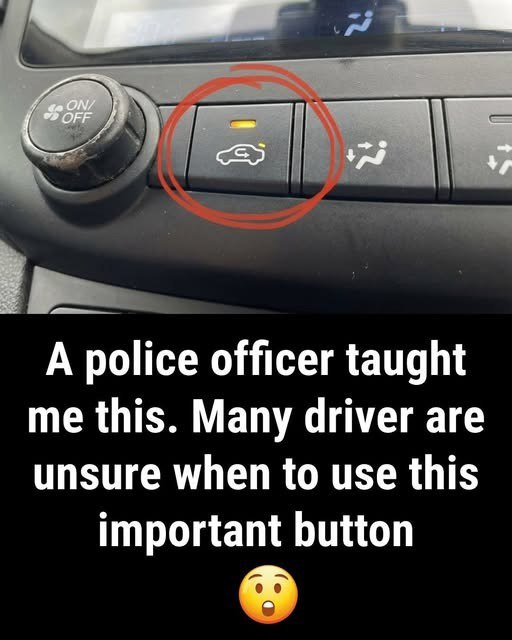
The modern car is a triumph of technology, filled with systems meant to improve safety, efficiency, and comfort. Yet among all the sensors, screens, and automated features, one of the most overlooked tools is a small button on the dashboard. It usually shows the outline of a car with a curved arrow looping inside. This is the air recirculation button—and while it may appear insignificant, using it correctly can dramatically improve your driving experience, especially in harsh weather or polluted conditions.
To understand its importance, it helps to know how your vehicle’s ventilation system normally works. In standard “fresh air” mode, the car constantly draws air from outside through intake vents. That air passes through a cabin filter, is cooled or heated by the climate system, and then flows into the interior. This steady exchange keeps oxygen levels healthy and prevents moisture from building up.
Recirculation mode changes that process entirely. When activated, a small internal door closes off the outside intake. Instead of pulling in new air, the system reuses the air already inside the cabin, continuously filtering and cooling or heating it. This closed-loop system may seem like a minor tweak, but it has powerful effects.
One of the biggest advantages appears in summer. On extremely hot days, outside air can feel like a furnace. In fresh-air mode, your air conditioner must cool that scorching air from scratch every time. That puts heavy strain on the compressor and engine. With recirculation turned on, the system works with air that has already been cooled. Each pass makes it colder, allowing the cabin to reach a comfortable temperature faster and with less effort from the car’s components.
This feature also acts as a protective barrier for your lungs. Think of it as a “shield” against pollution. When you’re stuck in traffic, driving through tunnels, or passing construction zones, the air outside may be loaded with exhaust fumes, dust, and unpleasant odors. Turning on recirculation seals the cabin, preventing those contaminants from entering. Instead, you breathe the cleaner air already inside. For people with allergies or asthma, this can make a noticeable difference, especially on high-pollen days.
There’s even a small financial upside. Because the air conditioner works more efficiently when cooling recirculated air, the engine experiences less load. Over long summer drives, that reduced strain can translate into slightly better fuel economy. It may not matter on a short errand, but over time, it adds up.
However, recirculation isn’t meant to be used nonstop. In cold or rainy conditions, it can become a problem. Every breath adds moisture to the air. In a sealed cabin, humidity rises quickly. When that warm, damp air touches cold glass, fog forms. If your windows begin misting over, recirculation is often the cause. Switching back to fresh air and activating the defroster brings in drier air, clearing the condensation and restoring visibility.
Extended use on long trips can also make the cabin feel stale. Oxygen levels slowly drop while carbon dioxide increases, which can contribute to fatigue or headaches. For alert driving, it’s wise to switch to fresh air every so often and let the car “breathe.” Recirculation also traps odors that originate inside the vehicle—spilled drinks, food bags, or damp clothing—so fresh air is the only way to flush those smells out.
Proper maintenance plays a key role in making both modes effective. The cabin air filter is the unsung hero of the system, catching dust, pollen, and soot before they reach you. Most manufacturers recommend replacing it every 12,000 to 15,000 miles, or sooner in dusty or polluted areas. A clogged filter reduces airflow, strains the blower motor, and can cause musty odors, making neither fresh air nor recirculation perform well.
In the end, that small button with the looping arrow is far more powerful than it looks. Use it on hot days for faster cooling, in heavy traffic to block harmful fumes, and during allergy season to keep the air inside clean. Just remember to turn it off when windows fog or when you need a burst of fresh oxygen on a long drive. With a little understanding, you can make every journey more comfortable, healthier, and more efficient.