
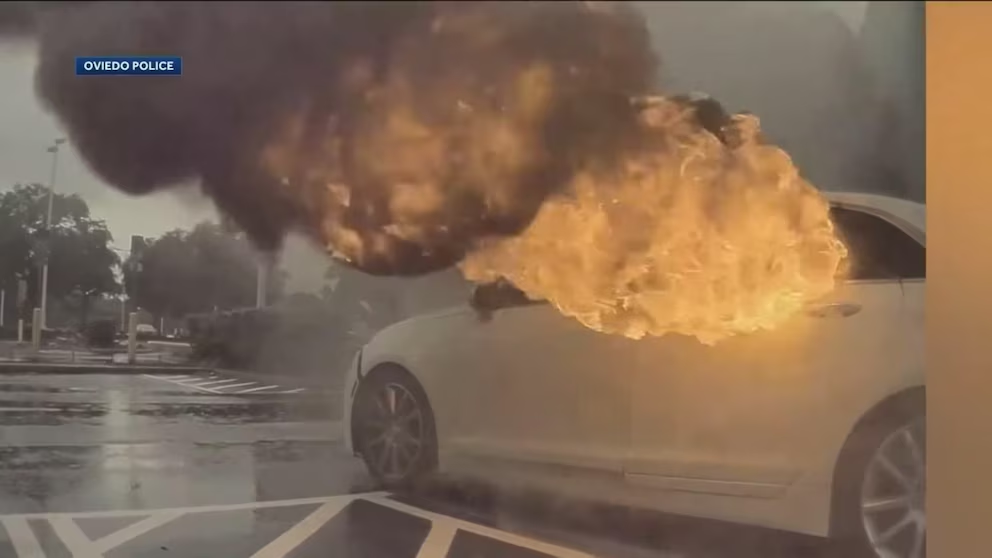
Inside the car were two young girls, trapped and screaming as flames crept dangerously close. The sound of their voices cut through the chaos, guiding the neighbors’ focus. A father, visibly distressed, hovered nearby, overwhelmed and shaken. The immediate priority was clear: the children had to be rescued.
Instinct took over. Residents ran toward the vehicle, some barefoot, some clutching phones or keys. There was no plan, only urgency—a shared understanding that hesitation could cost lives. They checked doors, gauged the flames, and edged closer despite the heat and smoke. Calls to emergency services were made, almost simultaneously. Sirens began to wail in the distance, but every second felt stretched to eternity.
As the fire threatened to engulf the vehicle, a breakthrough occurred. Bystanders, supported by the initial response of firefighters arriving on scene, managed to open the doors. The children were pulled to safety just as fire crews moved in to secure the area. Paramedics quickly assessed the girls: no burns, no smoke inhalation, no physical injuries—just shock and fear. Blankets and reassuring words replaced the chaos as the neighborhood exhaled.
Even with the rescue complete, the emotional impact lingered. Neighbors stood silently, many visibly shaken. Parents clutched their children tighter, minds replaying the scene over and over. How quickly an ordinary moment had turned deadly, and how fast collective action had prevented a tragedy.
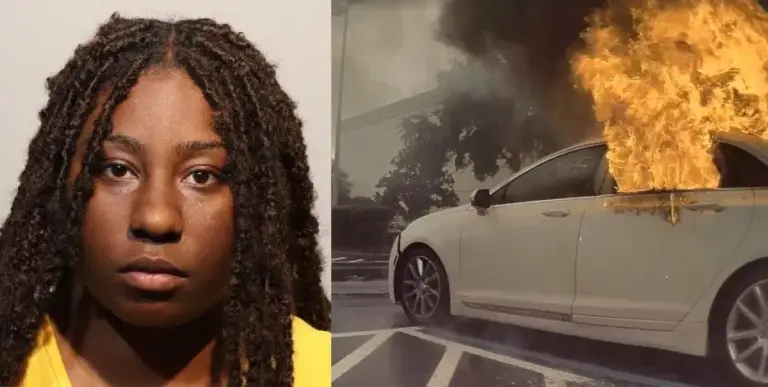
The father was taken into custody, cooperative but emotionally distressed. Authorities emphasized that evaluations were ongoing, focusing on understanding what led to the dangerous situation and preventing future risks. Support services were arranged for him and, most importantly, the children.
In the days that followed, the neighborhood reflected on what had happened. Conversations shifted from shock to awareness: about stress, mental health, and the need for community vigilance. Counselors and social workers shared guidance, urging early intervention to prevent crises before they escalate. Residents organized informal meetings, sharing feelings and reinforcing the value of acting together.
For first responders, the incident underscored the unique emotional weight of emergencies involving children. Firefighters and paramedics confirmed that psychological support was available for themselves, recognizing the unseen toll of high-stakes rescues.
Eventually, the street returned to its routine. Cars lined the curbs, homes returned to their quiet rhythm, but the memory of those screaming minutes remained. It was a reminder that safety can vanish in seconds—and that swift, courageous action can make all the difference between tragedy and survival.
What could have ended in heartbreak instead became a fragile second chance. The children were safe. The father was receiving support. And the community was left with a powerful lesson: awareness, preparation, and compassion can transform panic into protection.
Witnessing moments like these changes how a community sees itself. Have you ever experienced a near-tragedy that brought people together? Share your story and let’s start a conversation about courage, care, and community.