
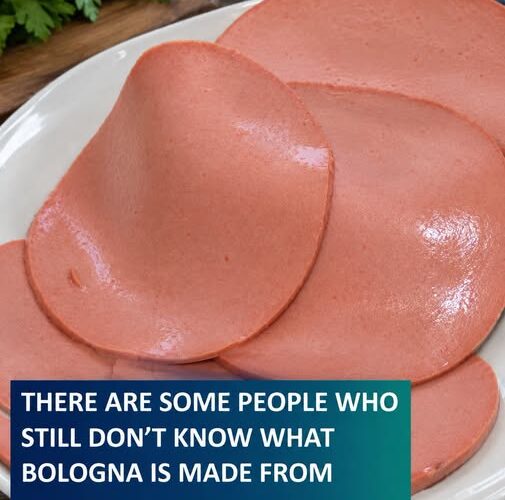

Traditional bologna is made primarily from finely ground meat and fat. Depending on the product, the meat may come from beef, pork, chicken, turkey, or a combination of meats.
The meat is ground extremely finely and blended with ingredients such as:
- Water or ice
- Salt
- Spices and seasonings
- Sugar or other sweeteners in some recipes
- Preservatives
- Flavorings
- Ingredients that help bind and stabilize the mixture
The resulting mixture is typically stuffed into a casing and cooked. After cooking and cooling, it becomes the familiar firm, sliceable deli meat.
Because recipes vary considerably, the ingredient list on a particular package is the best way to determine exactly what that product contains.
Is Bologna Made From Pork?
It can be.
Many traditional bologna recipes use pork, beef, or a combination of the two. However, modern grocery stores also sell bologna made from chicken and turkey.
This means you should not assume that every package of bologna contains the same type of meat. Some products are specifically labeled beef bologna, pork bologna, chicken bologna, or turkey bologna.
If you have dietary restrictions or avoid a particular meat, checking the label is especially important.
Why Is Bologna So Smooth?
One of the defining characteristics of bologna is its unusually smooth texture.
Unlike coarser sausages containing visible pieces of meat or seasoning, bologna is generally made using meat that has been ground very finely. The ingredients are blended into a uniform mixture before the sausage is cooked.
The amount of fat and moisture, along with the processing and emulsification of the meat mixture, helps produce the soft, consistent texture people associate with bologna.
That is also why a slice of bologna looks so different from something like a traditional coarse-ground sausage.
What Gives Bologna Its Flavor?
Bologna has a relatively mild, savory flavor. Salt plays an important role, while different manufacturers use their own combinations of spices and seasonings.
Depending on the recipe, you may find ingredients such as pepper, garlic, coriander, nutmeg, or other spices. The exact seasoning blend can vary significantly between brands.
Some varieties are also smoked, giving them a deeper and more distinctive flavor.
How Is Bologna Made?
Although commercial production is far more sophisticated than home sausage-making, the basic process follows a straightforward idea.
First, the selected meat is ground and combined with fat and other ingredients. The mixture is then processed until it reaches the desired fine texture.
Water or ice may be incorporated during processing to help control temperature and achieve the proper consistency. Seasonings, salt, and other ingredients are blended throughout the mixture.
The prepared sausage mixture is then placed into a casing or formed into the appropriate shape before being cooked.
Cooking serves several purposes. It changes the texture of the meat, develops flavor, and produces the firm consistency needed for slicing.
After cooking, the bologna is cooled and prepared for packaging. Commercial products are generally sold either as whole chubs or pre-sliced deli meat.
Is Bologna the Same as Mortadella?
Not exactly, although the two are related.
Both bologna and mortadella belong to the broad family of cooked, emulsified sausages, and American bologna was historically influenced by European sausage-making traditions.
However, traditional mortadella from Bologna, Italy, is known for its large cubes of visible pork fat and characteristic seasoning. American-style bologna is typically much smoother and more finely processed.
The names are connected historically, but the products found in an American supermarket and a traditional Italian mortadella are not identical.
Does Bologna Contain Preservatives?
Many commercially produced bologna products contain preservatives or curing ingredients designed to help maintain quality, flavor, color, and shelf life.
One commonly encountered curing ingredient is sodium nitrite, although formulations differ by manufacturer and product.
Some products are marketed as having no added nitrites or nitrates, while others use alternative labeling or naturally derived sources. If this is important to you, read the package carefully rather than relying only on the front of the package.
Is Bologna Healthy?
Whether bologna fits into a healthy diet depends on the overall diet, portion size, and the specific product.
Bologna can provide protein, but many varieties are also relatively high in sodium and saturated fat. Processed meats are generally foods that health organizations recommend limiting rather than making a major part of the diet.
Nutritional values can vary substantially between pork, beef, turkey, chicken, reduced-fat, and other varieties.
If you eat bologna regularly, comparing nutrition labels can help you choose a product with less sodium, less saturated fat, or a higher protein content, depending on your dietary goals.
Why Does Bologna Have a Red or Pink Color?
The familiar pink or reddish color of many bologna products comes from the way the meat is processed and cooked, as well as curing ingredients used in some formulations.
Curing can help preserve the characteristic color of processed meats even after cooking.
However, color alone is not a reliable way to determine whether a product is fresh or safe to eat. Always follow the storage instructions and expiration or use-by guidance on the package.
Can You Eat Bologna Straight From the Package?
Commercially produced deli bologna is generally sold fully cooked and is intended to be eaten without additional cooking when handled and stored according to the manufacturer’s instructions.
It is commonly served cold in sandwiches, but it can also be fried, grilled, baked, or incorporated into other dishes.
One of the most famous preparations is simply fried bologna. Heating the slices causes them to brown and develop a slightly crisp exterior while retaining their soft interior.
Why Do People Like Bologna So Much?
Part of bologna’s popularity comes from its simplicity.
It is inexpensive, convenient, easy to store, and requires almost no preparation. A few slices can become a sandwich with bread, cheese, mustard, mayonnaise, or pickles. It can also be diced into salads, fried for breakfast, added to casseroles, or served as part of a simple snack.
For many people, its appeal is also nostalgic.
Bologna sandwiches are associated with school lunches, childhood meals, family kitchens, and inexpensive comfort food. The taste may be simple, but the memories attached to it can be surprisingly powerful.
The Bottom Line
So, what is bologna made of?
At its most basic, bologna is a finely ground, cooked sausage made from meat, fat, water, salt, seasonings, and other ingredients used to create its texture, flavor, color, and shelf stability.
The exact recipe varies from one product to another. Some bologna is made from pork and beef, while other varieties use poultry. Some contain curing ingredients and additional preservatives, while specialty products may use different formulations.
If you want to know exactly what is in the bologna you’re buying, the ingredient and nutrition labels provide the most reliable answer.
Despite its humble reputation, bologna has a surprisingly interesting history — connecting American deli counters with European sausage-making traditions and evolving into one of the most recognizable lunch meats in the United States.