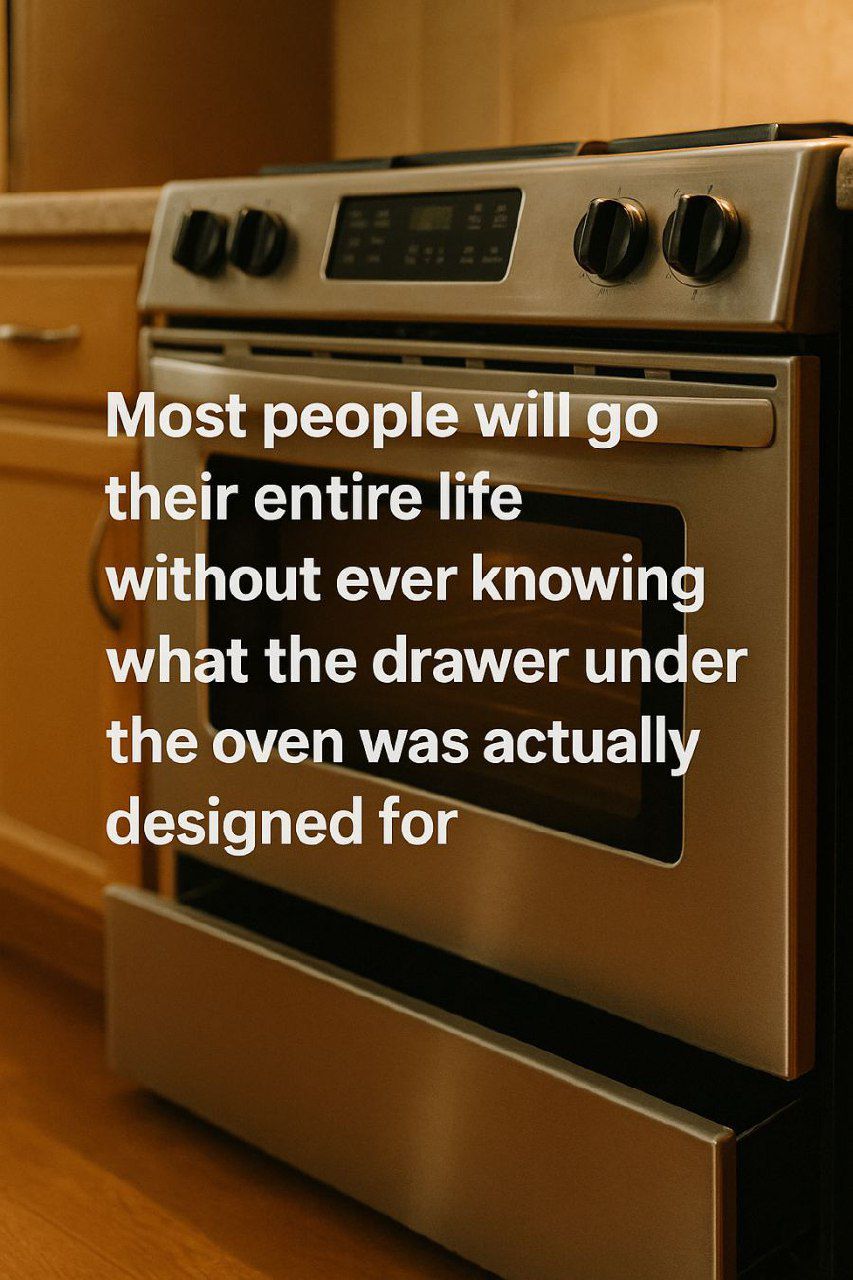
In most homes, the kitchen is the heart of daily life. Meals are made, conversations unfold, routines repeat—but even in the most familiar spaces, there are details we rarely notice. Take the drawer beneath your oven. Millions of people slide in baking sheets, stack pans, and shove away awkward cookware—never realizing this “junk drawer” may have a very different purpose.
For decades, many oven designs included this lower compartment as a warming drawer. Its job? To keep food hot after cooking without drying it out or continuing to cook. Before microwaves and sprawling kitchens became standard, this simple feature allowed meals to be prepared ahead of time and held at a safe, ready-to-serve temperature.
A warming drawer operates at a low, controlled heat—typically 140–200°F—hot enough to prevent food from cooling, gentle enough to avoid overcooking. For large meals, multi-course dinners, or timing several dishes at once, it’s a game-changer. Chefs and bakers even use it to proof dough or warm plates for service.
So how did it become a catch-all for clutter? Convenience. The drawer is wide, shallow, and easy to access. Homeowners naturally repurposed it for storage, and over time, the original purpose was forgotten. Now, many of us store pans, paper liners, or even plastic items inside—potentially creating a fire hazard if the drawer is turned on or residual heat from the oven rises.
Not all ovens are the same. Some drawers are purely for storage, without heat or controls. Others have a built-in heat source and temperature settings—dials, switches, or digital buttons. The difference isn’t obvious from the outside, which is why checking your user manual or the manufacturer’s website is the safest move.
Continue reading on next page…