“I’m fine,” the patient whispered each time. “Please don’t make trouble.”
That’s when the orderly started noticing the visitor.
He arrived each evening, just before visiting hours ended. Neatly dressed, polished shoes, hair perfectly combed, voice calm and courteous. Introduced himself as a relative. Nobody questioned him—family visits were encouraged.
But the timing never varied. And every night, after he left, the screams returned.
She mentioned it to a senior nurse, who told her to mind her duties. A doctor shrugged: elderly patients were emotional at night. A coworker leaned in, warning quietly: “Don’t get involved. Families are complicated.”
But the screams continued.
One night, the orderly passed Room 7 and froze. Raised voices. Whispered anger. A choked, desperate sound—cut off too quickly.
She went home shaken. She didn’t sleep. Fear turned into resolve. If nobody else would act, she would.
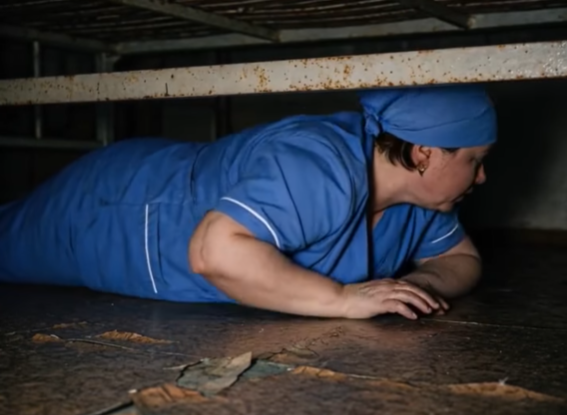
The next evening, she volunteered to clean Room 7 early. The patient was resting, eyes closed, breathing shallow. Heart hammering, the orderly slid down to the floor, crawling quietly beneath the bed. Dust coated her sleeves. The metal frame creaked softly overhead. She lay flat, barely breathing, listening to her pulse.
Footsteps approached. The door opened.
She recognized the man immediately by his shoes. Polished leather. Expensive soles.
At first, his voice was gentle, almost kind. He asked how the patient was feeling. Spoke of “what made sense at her age,” of property, of signatures that would “make everything easier.” The woman refused quietly, eyes tight.
Then his tone shifted. Calm. Controlled. Terrifying. Threats about medication. Hints that doctors could be persuaded to say she was worsening. Warnings that resistance would make things harder for her.
And then she saw it—the syringe. Unmarked. Pulled from his coat with ease, practiced, deliberate.
The patient screamed. Louder than ever. Desperate. Then, mid-cry, her hand went limp against the sheets.
The orderly didn’t think. She acted. Rolled out from under the bed, screaming as loudly as she could, flinging the door open. The hallway erupted. Nurses ran. Doctors followed. The man froze, syringe still in hand. Panic flashed across his face.
Security arrived minutes later. The syringe was confiscated. His bag was searched—inside were documents already filled out, ready to transfer the patient’s home and assets entirely to him.
Tests confirmed the injections weren’t medicine—they were substances designed to induce weakness, confusion, and deterioration, making the woman appear incapable of resisting.
The patient survived. Slowly, but real. With the truth exposed, she finally spoke openly about the months of coercion and fear. Legal protections were put in place. Visiting protocols were tightened. Staff were retrained to trust their instincts, not silence them. Room 7 grew quiet again—but this time, it was the right kind of quiet.
The ripple of the orderly’s courage reached far beyond a single night. Protocols across the hospital were reviewed. Staff were reminded that vigilance can save lives. What had nearly gone unnoticed became a turning point for the entire ward.
The screams stopped.
Not because no one was listening—but because someone finally did.
Sometimes protection doesn’t come from policy or authority. Sometimes it comes from one person refusing to stay silent, even when fear says otherwise. Courage alone can strip cruelty of its power—and save a life.
If something feels wrong, don’t ignore it. Speak up. Sometimes one voice is all it takes to change everything. Share your story or tip to help protect someone today.