 Curious & Viral
Which Egg Comes From the Healthiest Hen?
Pick 1, 2, or 3—The Answer May Surprise You
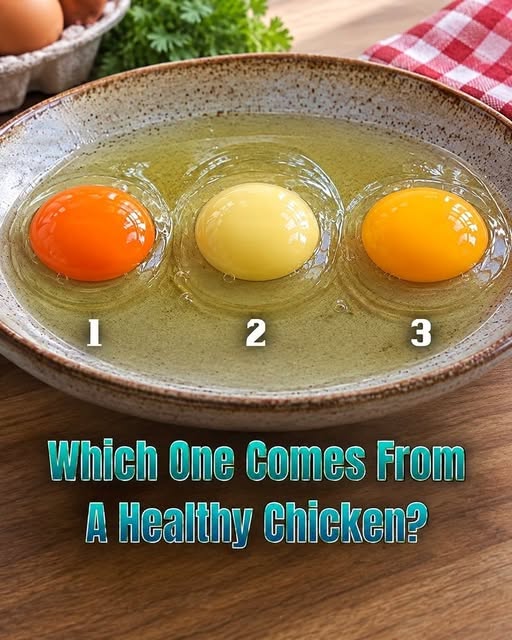
Take a look at three eggs sitting side by side.
Egg 1 has a pale yellow yolk.
Egg 2 has a deep golden yolk.
Egg 3 has an almost orange center.
If you had to choose which one came from the healthiest hen, which would you pick?
Most people would probably choose the darkest yolk.
It looks richer. More colorful. Perhaps even more nutritious.
But here's the interesting part:
You can't reliably determine a hen's health—or an egg's overall nutritional quality—just by looking at the yolk color.
And the reason has a lot to do with what the hen ate.
Why Are Some Egg Yolks So Orange?
Yolk color is influenced largely by pigments in the hen's diet.
Feeds containing yellow grains, green plants, and other pigment-rich ingredients can produce yolks ranging from pale yellow to deep orange. USDA guidance specifically notes that diet can produce substantial differences in yolk pigmentation.
That means a bright orange yolk can certainly tell you something about the hen's feed.
But it doesn't tell you the whole story.
A darker yolk isn't automatically proof that the hen was healthier, better cared for, or raised under superior conditions.
Likewise, a pale yolk isn't automatically a sign that something is wrong.
So Which Egg Is the “Healthiest”?
If you're playing the visual guessing game, there's actually no reliable way to identify the healthiest hen from yolk color alone.
That's the trick.
Egg 1, 2, and 3 could all come from healthy hens.
Their yolks could simply reflect differences in diet.
Researchers have also found that factors such as the hen's diet, age, strain, and rearing environment can influence the nutrient composition of eggs. However, some measured differences may be relatively small from a human nutrition perspective.
 Up Next: Page 2 of 3
So the most colorful egg isn't automatically the winner.
That doesn't mean yolk color is meaningless.
Continue Reading