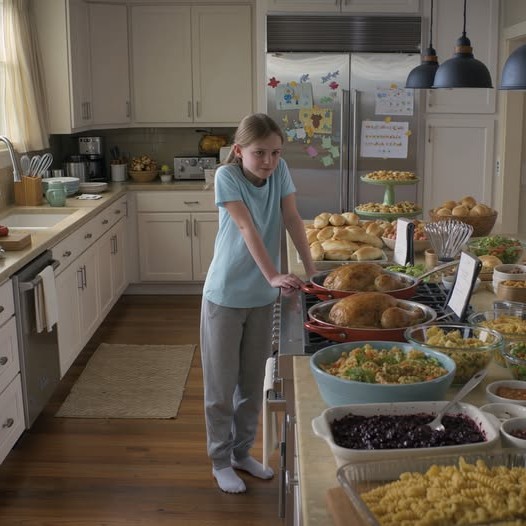
“We’ve decided to celebrate at a restaurant instead. Adults only.”
I reread it again and again. Adults only. After three days of nonstop work. After a teenager poured her heart into a meal meant to honor her grandmother.
I walked into the kitchen slowly. “Emily,” I said carefully, “the plans changed.”
She frowned. “What do you mean?”
I handed her my phone. She read the message once. Her shoulders slumped. Her eyes filled, but she held the tears back as she looked around at the food—beautiful, finished, and suddenly unwanted.
“Why would they do that?” she asked quietly.
I hugged her and promised the food wouldn’t be wasted.
That evening, while my parents dined out, I posted in a local community group offering free home-cooked meals to anyone who needed one. Within an hour, people were at our door—seniors, tired parents, neighbors struggling. Emily served every plate herself. She listened as people praised her cooking and thanked her sincerely.
For the first time that day, she stood taller.
The next morning, reality crashed back in.
Someone slammed on our front door just after nine. Emily froze. I knew who it was before I opened it.
My parents stormed in, furious. My mother accused me of humiliating them. “People are calling us selfish,” she snapped.
“Then maybe you should ask why,” I said.
My father tried to explain it away. “The restaurant was easier.”
“Emily cooked for three days,” I said. “Three.”
My mother dismissed it. “She’s a child. She’ll forget.”
That was the moment something inside me snapped.
“She’s your granddaughter,” I said firmly. “And she worked herself to exhaustion for you.”
Emily heard it. She flinched.
When my mother blamed Emily for not explaining what she was doing, Emily whispered, “I didn’t think I had to.”
The room felt heavy and airless.
Finally, my father admitted the truth—they came because my post made them look bad.
“No,” I said. “You made yourselves look bad when you walked away from her.”
I sent Emily to the kitchen and told my parents plainly: strangers showed her more respect in one night than they did in years. Until they could treat my daughter with dignity, they weren’t welcome.
My mother left angry. My father followed, silent.
Emily asked if it was her fault. I held her and told her no—because it wasn’t.
In the days that followed, neighbors posted photos of Emily’s food. Compliments poured in. Someone asked if she catered. Another offered to pay her for an event. Emily began looking into culinary schools—not out of obligation, but joy.
Then my father returned alone.
He apologized—properly. To Emily. He admitted he hadn’t paid attention. He gave her a chef’s knife engraved with her initials.
“For your future,” he said.
Emily cried. I watched something begin to heal—not perfectly, but honestly.
That night, she asked if things would get better.
“Yes,” I told her. “Not instantly. But they will.”
Sometimes family fails you. Sometimes it bends. And sometimes, when you protect the person who deserves it most, you build something stronger than what you inherited.
What would you have done in this situation? Share your thoughts and join the conversation below.