For medical literature, this was the first documented case of such an injury morphology.
Clinical Evolution: Heroic Efforts, Tragic Outcome
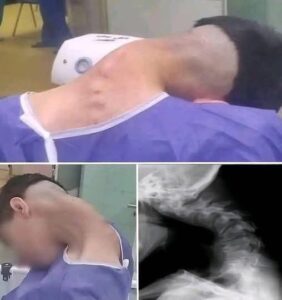
On arrival, the patient was unstable. His blood pressure was erratic, his breathing compromised, and neurological function severely impaired. He was intubated and placed on ventilatory support. Traction was applied to his cervical spine to relieve pressure on the spinal cord.
But despite these interventions, his condition showed no improvement. The degree of spinal canal compromise and systemic instability meant surgery was not a viable option. Within 48 hours of the accident, the young man succumbed to his injuries.
Why This Case Matters to Medicine
This tragedy is significant for several reasons. First, it highlights the incredible force that even a single falling object can generate when striking the head, creating enough axial load to fracture and displace vertebrae in ways rarely seen.
Second, it revealed a gap in current classification systems. Most frameworks assume accompanying features like facet dislocations or pedicle fractures. Here, the absence of those elements but presence of a deadly retropulsion made the case unclassifiable—demonstrating that even widely accepted systems can fail when faced with atypical patterns.
Finally, it serves as a reminder that classification isn’t just academic. Accurate categorization of spinal injuries guides clinical decisions and surgical planning. Without a clear framework, doctors face added challenges in determining treatment strategies, prognosis, and long-term outcomes.
The Biomechanics Behind the Injury
The cervical spine, particularly the subaxial region (C3–C7), is highly mobile and responsible for much of the neck’s movement. When a direct axial load is transmitted through the skull, vertebral bodies can be compressed between neighboring vertebrae.
 Up Next: Page 3 of 3
In this case, the downward blow caused C5 to collapse backward into...
The consequences were catastrophic: impaired respiration, systemic shock, and irreversible neurological damage.
Continue Reading