 News
News Young man hospitalized because he dropped his ca!
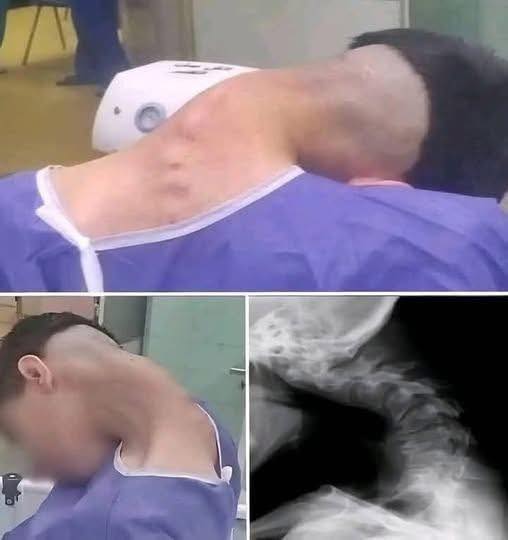
Workplace safety failures can change lives in a matter of seconds. This grim truth was underscored by a rare and tragic case reported in the Journal of Orthopaedic Case Reports in September 2022. An 18-year-old worker in India suffered a catastrophic cervical spine injury when a heavy metallic object fell directly onto the front of his head at his workplace. Despite immediate emergency care and stabilization, the young man’s injuries were so severe that he died within two days.
What makes this case stand out is not only its devastating outcome but also the medical anomaly it presented. The pattern of spinal fractures was so unusual that it did not fit into any existing classification system, forcing spine specialists to confront the limitations of current diagnostic frameworks.
The Incident: A Sudden Blow That Changed Everything
The young man was standing at his workplace when a large metallic pipe—or possibly a beam—suddenly fell from above, striking the frontal region of his head. The impact was so powerful that he lost consciousness instantly. Within moments, he slipped into respiratory distress and shock, his body unable to cope with the trauma.
Emergency responders rushed to the scene and acted quickly. They intubated him to secure his airway, stabilized his vital signs as best they could, and fitted a rigid cervical collar to immobilize his neck. He was then transported to the nearest hospital for further evaluation and treatment.
Medical Findings: A Fracture Beyond Classification
At the hospital, doctors ordered a non-contrast CT scan of his cervical spine. The results revealed a shocking and extremely rare injury:
A retropulsion fracture of the C5 vertebral body, meaning that part of the vertebra had been forced backward into the spinal canal.
A secondary fracture involving the postero-superior portion of the C6 vertebral body.
Strikingly, the facet joints and pedicles remained intact, which is unusual in such high-impact injuries.
This combination baffled doctors. Typically, cervical spine injuries resulting from axial loads are categorized within established frameworks such as the Allen & Ferguson system, the Subaxial Injury Classification System (SLICS), or the AO Spine classification. But in this case, the unique “nutcracker-like” effect—where C5 was compressed between adjacent vertebrae and pushed backward without facet displacement—did not match any recognized category.
 Up Next: Page 2 of 3
For medical literature, this was the first documented case of such an...
Clinical Evolution: Heroic Efforts, Tragic OutcomeOn arrival, the patient was unstable. His blood pressure was erratic, his breathing compromised, and neurological function...
Continue Reading