 Health
ALERT: These Are the Signs Your Child’s Rash Needs Medical Attention
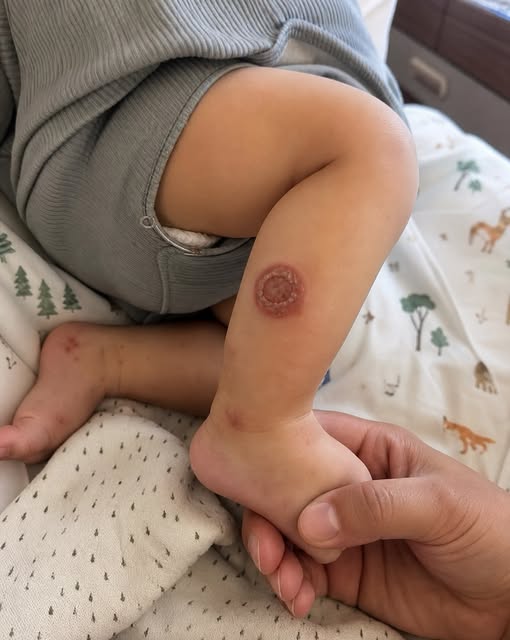
A small red ring appears on your child’s skin.
At first, it may seem harmless — perhaps a minor irritation, an insect bite, or something that will disappear by morning. But hours later, the mark looks different. It is larger, redder, more noticeable, and suddenly impossible to ignore.
For a parent, that moment can trigger a flood of questions.
Is it ringworm? Could it be an infection? Was it caused by something at school or on the playground? Could a pet have passed something along? Is it an allergic reaction? And if the area continues to spread, should you be worried?
The appearance of a ring-shaped rash can certainly be associated with ringworm, a common fungal skin infection. But many other conditions can produce similar-looking patches. Bacterial infections, eczema, allergic reactions, inflammatory skin conditions, and insect bites can sometimes resemble one another, particularly during the early stages.
That is why trying to identify the cause based solely on a photograph or appearance can be misleading.
A rash that looks relatively minor can change considerably over several hours or days. It may become itchy, develop scaling or crusting, become warm or painful, or begin appearing in additional areas. In some cases, a child may also develop a fever or seem generally unwell.
Those changes are important information for a healthcare professional.
Parents can help by documenting what they see. Take a clear photograph when the rash first appears and another if it changes. Make a note of when you first noticed it, whether it has grown, whether your child is scratching it, and whether there have been any other symptoms.
Think about recent exposures, too.
Has your child recently played outdoors? Been around animals? Shared sports equipment, towels, clothing, or bedding? Started using a new soap, lotion, detergent, or medication? Had contact with another child who developed a rash?
These details can help a pediatrician or dermatologist work toward the correct diagnosis.
It is also important to pay attention to the child's overall condition rather than focusing exclusively on the appearance of the skin.
 Up Next: Page 2 of 2
A rash that is rapidly spreading, increasingly painful, warm, swollen, or producing...
Some situations require more urgent assessment. If your child has difficulty breathing, swelling of the lips or tongue, fainting, severe illness, or...
Continue Reading