 Curious & Viral
I Stepped Into My Yard for Coffee—Then I Noticed Something Moving on the Ground
It was an ordinary morning. I stepped into the yard with a cup of coffee in one hand and my phone in the other, expecting nothing more exciting than a few quiet minutes before the day began.
Then I noticed something unusual near the pavement.
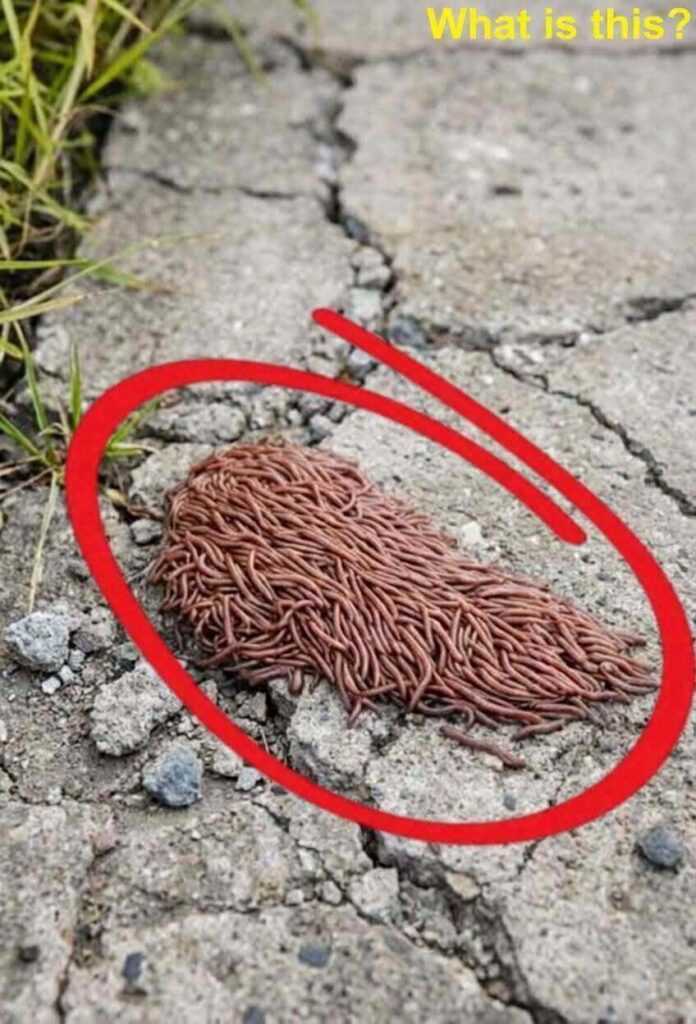
At first, it looked like a tangled pile of thin, dark strands. I couldn't immediately work out what I was looking at.
Then the mass shifted.
Not all at once, but in small, rippling movements that made the entire cluster appear to be alive.
I stopped walking.
Something Was Moving in the Yard
I leaned forward slightly, trying to understand what I was seeing.
The strands twisted around one another, creating a dense, moving patch on the wet ground. The sight was unexpected enough that I stepped back and reached for my phone to record it.
My first guesses were completely wrong.
It looked almost like spilled noodles, except that the entire pile seemed to move independently.
I had never seen anything quite like it in my own yard.
The Search That Solved the Mystery
Curiosity eventually overcame my initial discomfort.
I searched online for descriptions of the strange formation, looking for something that resembled the scene in front of me.
The answer was far more ordinary than the appearance suggested.
The moving mass appeared to be a cluster of earthworms.
Earthworms are usually associated with damp soil, garden beds, and the occasional worm crossing a sidewalk after rain. Seeing many of them gathered together in one place, however, can create a startling visual effect.
What looked like one strange organism was actually a collection of individual animals moving over and around one another.
Why Do Earthworms Appear After Rain?
Earthworms need moisture to survive, and wet conditions can make it easier for them to travel across the soil surface.
Scientists have proposed several explanations for why earthworms emerge after rainfall. Depending on the species and conditions, they may be moving to new areas, searching for food or mates, or responding to changes in the soil environment.
Heavy rain can also fill air spaces in waterlogged soil, reducing the availability of oxygen for some species. However, the familiar explanation that all earthworms come out simply to avoid drowning is incomplete. The reasons can vary. (Earthworm Society of Britain; U.S. National Institute of Environmental Health Sciences)
 Up Next: Page 2 of 2
Why the Cluster Looked So Unusual
Earthworms are generally seen individually or scattered across a damp surface.
Continue Reading