 US Politics
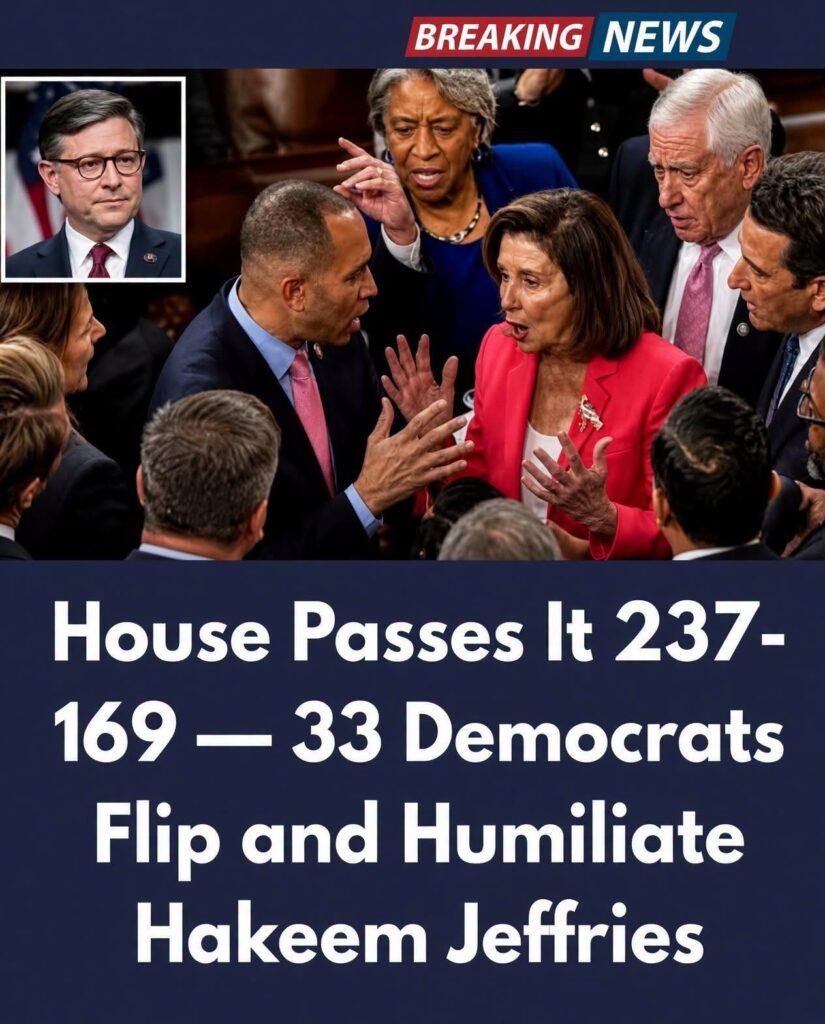
House Passes Israel Boycott Bill 237–169 as Democrats Split Over Free Speech and Campus Policy
The U.S. House of Representatives has passed legislation that would restrict certain federal higher-education funding for colleges participating in specified commercial boycotts of Israel. The vote exposed differences among Democrats over how to address anti-Israel boycotts while protecting freedom of expression and academic independence.
H.R. 4795, known as the Protect Economic and Academic Freedom Act of 2026, passed the House on September 3, 2026, by a vote of 237 to 169. The official tally recorded 33 Democrats voting in favor and 167 voting against the measure.
The legislation now faces further consideration in the Senate. Its future will depend on whether senators support the proposed restrictions and how they assess the balance between preventing discrimination and protecting constitutionally protected expression.
What the House Vote Shows
The vote demonstrated bipartisan support for the bill, although most Democrats opposed it.
According to the official House record, 203 Republicans and 33 Democrats voted in favor. Two Republicans voted against the legislation, while one independent member also supported it. A total of 27 representatives did not vote.
The result highlights a disagreement within the Democratic Party over how institutions should respond to boycotts of Israel.
Some lawmakers argue that universities should not engage in certain forms of commercial discrimination against Israel. Others contend that government funding restrictions could discourage institutions and individuals from participating in political advocacy.
The vote count establishes how representatives voted, but it does not, by itself, explain every lawmaker's reasoning or the broader political consequences.
What Would the Legislation Do?
The bill would amend the Higher Education Act of 1965 to make institutions participating in specified nonexpressive commercial boycotts of Israel ineligible for certain federal higher-education funds.
It would also introduce certification requirements concerning students' participation in certain academic programs in Israel.
Supporters describe the proposal as a way to address discriminatory institutional practices and protect equal access to educational opportunities.
The legislation focuses on particular institutional activities and funding conditions. It should not automatically be interpreted as a general prohibition on students expressing political opinions or criticizing the Israeli government.
 Up Next: Page 2 of 3
The exact scope of any restrictions would depend on the bill's language...
Supporters argue that universities have a responsibility to protect students from discrimination and ensure that educational opportunities remain accessible.
Continue Reading