
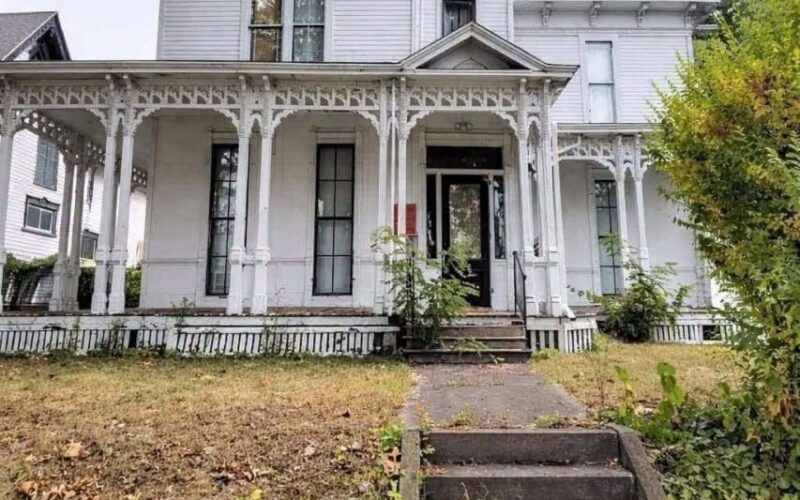

This is where the romance of a historic fixer-upper meets reality.
A house can have incredible architectural potential while also requiring an extensive investment to make it comfortable and safe.
Before anyone considers taking on a restoration project of this scale, a professional inspection would be essential.
The foundation, roof, drainage, framing, electrical system, plumbing, heating and cooling equipment, and moisture conditions would all deserve close attention.
Older houses can also contain materials such as lead-based paint or asbestos-containing materials, which may require appropriate testing, handling, and professional remediation.
In other words, the purchase price would only tell part of the story.
The condition of the structure would ultimately determine how ambitious — and how expensive — the restoration could become.
Why the Original Woodwork Matters
It would be easy to look at damaged siding or weathered porch components and imagine replacing everything with modern materials.
But doing so could erase much of what makes the property special.
Historic woodwork often contains craftsmanship and proportions that are difficult to reproduce perfectly. Decorative brackets, porch spindles, trim, doors, and other details can sometimes be repaired or carefully replicated by experienced restoration specialists.
The same principle can apply to original windows.
Rather than automatically replacing old windows, a restoration-minded owner may investigate whether they can be repaired, weatherproofed, and upgraded while retaining their historic appearance.
That extra effort can help preserve the visual identity of the house.
Imagine What It Could Look Like Inside
The exterior tells only part of the story.
A multi-story Victorian home of this type could potentially offer generous rooms, tall ceilings, large windows, traditional circulation patterns, and architectural details hidden behind years of wear.
The challenge would be introducing modern conveniences without turning the interior into something that could belong to any newly built house.
A thoughtfully planned renovation could incorporate a modern kitchen, updated bathrooms, efficient heating and cooling, improved insulation, new electrical infrastructure, and updated plumbing.
At the same time, original staircases, doors, fireplaces, moldings, flooring, and other surviving features could remain central to the design.
The goal wouldn’t necessarily be to make the house look new.
It would be to make it livable again without losing its identity.
The First Renovation Shouldn’t Be the Most Exciting One
For a property like this, the temptation might be to start with the features everyone will notice in photographs.
A fresh coat of paint. A restored porch. Beautiful landscaping. A dramatic kitchen renovation.
But those projects should come later.
The first priority should be protecting the building itself.
That means addressing problems such as roof leaks, drainage, moisture intrusion, structural concerns, and weatherproofing before investing heavily in cosmetic improvements.
Once water is kept out and the structure is secure, the decorative restoration can begin.
It may not be the most glamorous stage of the project, but it could be the most important.
A Historic House Requires a Different Kind of Budget
Restoring an old home isn’t simply a matter of estimating the cost of a conventional remodel.
Specialized labor may be necessary. Unexpected structural problems can emerge after walls or floors are opened. Custom millwork can be expensive. Historic windows and decorative components may require careful restoration rather than off-the-shelf replacements.
There can also be local preservation requirements, property taxes, insurance considerations, permitting costs, and contractor availability to account for.
That’s why a detailed inspection and realistic contingency budget would be critical before taking on a project like this.
The cheapest way to approach a historic property isn’t always to replace everything.
Sometimes the better strategy is to understand what is original, what can be repaired, and what truly needs to be replaced.
What Makes This House So Interesting?
It isn’t simply the size.
It isn’t even the tower.
It’s the possibility hidden underneath the neglect.
The wrap-around porch still hints at the craftsmanship that once defined the property. The tall windows preserve the home’s original proportions. The gables and tower continue to give it a distinctive silhouette.
Even the weathered exterior tells part of the story.
With the right restoration plan, those elements could once again become the defining features of a remarkable home.
From Forgotten Property to Architectural Showpiece?
That’s the question.
A restoration of this kind would take time, money, patience, and skilled craftsmanship. There would almost certainly be surprises along the way.
But historic properties also offer something new construction cannot easily reproduce: genuine age, craftsmanship, and a connection to the people and period that came before.
The ultimate goal wouldn’t be to erase every sign that the house is old.
It would be to protect the architectural details that give it character while carefully introducing the safety, efficiency, and comfort expected from a modern home.
And that may be the most fascinating thing about a neglected Victorian residence like this.
The house doesn’t need to become something completely different. It simply needs someone willing to uncover what is already there.