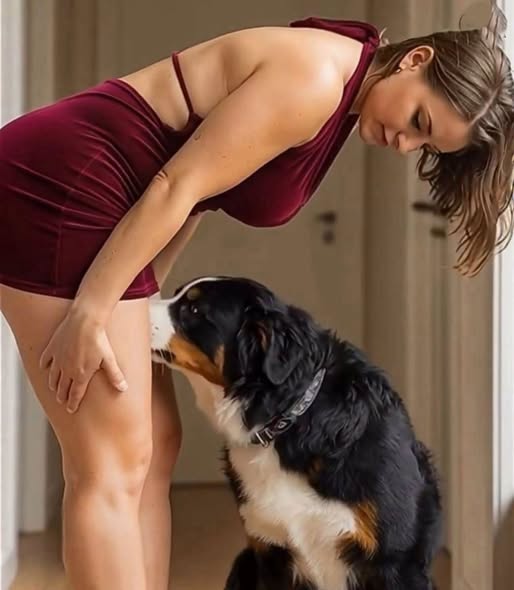
Your Dog Uses Scent as a Powerful Information Tool
When a dog sniffs a person, it is not necessarily trying to find out one specific thing. Instead, it may be collecting a variety of scent signals from clothing, skin, hair, shoes, and objects the person has recently encountered.
These odors can change depending on where someone has been, what environments they have visited, and which other people or animals they have encountered. For a dog, these differences can make each person smell distinct.
This is one reason dogs sometimes spend more time investigating one visitor than another. A new scent can simply be more interesting or unfamiliar.
Why Dogs Rely So Much on Their Noses
Dogs have a highly developed sense of smell, and scent is an important part of their everyday behavior. They use it while exploring, locating food, recognizing familiar individuals, and investigating places they have never visited before.
Instead of seeing sniffing as a strange habit, it can be more useful to think of it as a form of canine observation.
A dog walking through a room may notice details that humans completely overlook because the information is carried through scent rather than sound or sight.
Sniffing Can Be Part of a Social Greeting
When dogs meet one another, sniffing is a common part of their interaction. Similar behavior can occur when dogs meet people.
A dog may approach cautiously, take a few short sniffs, step back, and then return for another investigation. This does not automatically indicate fear or aggression. In many cases, the dog is simply deciding that the unfamiliar person is worth examining more closely.
The speed and intensity of the greeting can vary greatly from one dog to another. Some dogs are naturally curious, while others prefer to observe unfamiliar people from a distance before approaching.
Why Your Dog May Sniff Some People More Than Others
There is no single explanation for why a dog becomes especially interested in one person.
The individual may carry an unfamiliar scent, have recently interacted with another animal, or simply be wearing clothing that smells different from what the dog normally encounters. Environmental odors picked up from cars, parks, kitchens, workplaces, and outdoor areas can also contribute.
Sometimes the explanation may be much simpler: the dog has discovered something interesting and wants to investigate it.
Sniffing Does Not Automatically Reveal a Person’s Health
It is tempting to assume that a dog’s interest in a particular scent means the animal has detected a specific medical condition. Although trained dogs have been studied for their ability to identify certain chemical patterns associated with medical conditions, ordinary pet sniffing should not be treated as a reliable medical test.
A dog showing unusual interest in someone does not by itself prove that anything is wrong.
The safest interpretation is usually the simplest one: the dog has noticed an unfamiliar or interesting scent.
Should You Stop Your Dog From Sniffing Visitors?
In many ordinary situations, sniffing is simply normal canine behavior. Still, good manners and safety matter.
A dog should be taught to greet visitors calmly, especially around children, older adults, or people who are uncomfortable around animals. Owners can redirect excessive sniffing with a familiar cue and reward relaxed behavior.
Visitors should also be allowed to decide how closely they want to interact with a dog. Respecting personal boundaries helps create a positive experience for both the person and the animal.
The Bigger Picture
What looks like an embarrassing habit may actually be one of the most natural ways a dog interacts with its surroundings.
Dogs use scent to explore, recognize familiar environments, investigate new people, and gather information that humans cannot easily perceive. Their noses are not simply tools for finding treats—they are central to how they experience everyday life.
So the next time your dog greets someone with an enthusiastic sniff, there may be nothing mysterious or alarming happening at all. Your dog is simply doing what dogs do best: investigating the world through scent.
Note: Individual dogs behave differently, and unusual changes in behavior can have many possible explanations. Concerns about a pet’s health or behavior should be discussed with a qualified veterinarian or animal-behavior professional.