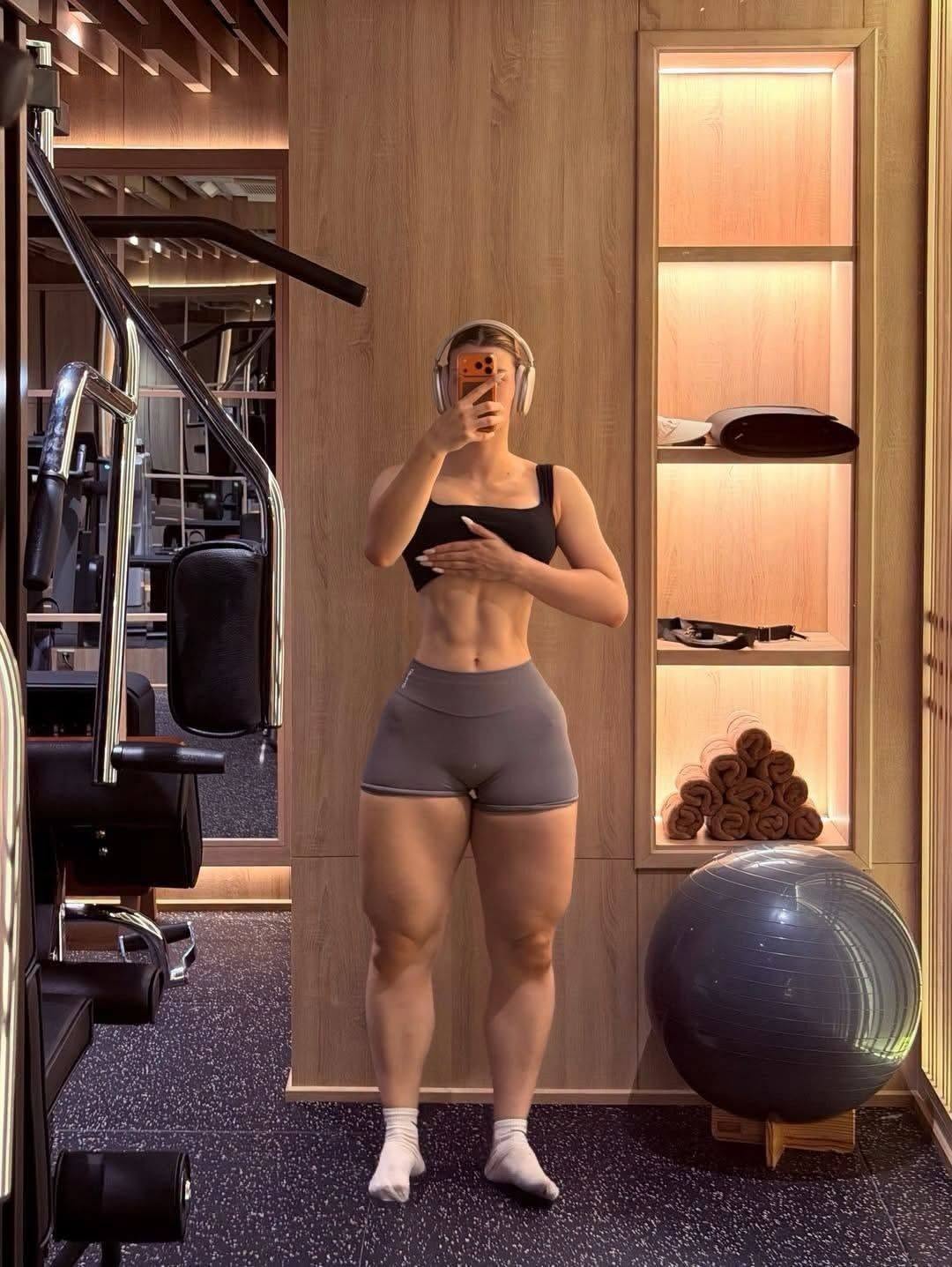
What Determines the Appearance of a Thigh Gap?
The appearance of space between the thighs can be influenced by several physical factors. These include bone structure, the shape and angle of the pelvis, the alignment of the legs, muscle distribution, and the natural way a person stands.
Body composition can also influence how the legs appear, but it is only one factor among many. Two people with similar body sizes can have noticeably different leg shapes because their skeletal structures and proportions are different.
This is important because appearance alone cannot provide a reliable measure of fitness, health, or lifestyle.
Why Online Claims Can Be Misleading
The internet is full of claims suggesting that a particular body feature reveals someone’s personality, health, attractiveness, or even future behavior. These statements can sound convincing, especially when they are repeated frequently.
However, there is no scientific basis for assuming that the presence or absence of a thigh gap determines personality or character.
A person’s body shape is not a personality test. Confidence, kindness, intelligence, emotional awareness, and other personal qualities cannot be accurately determined by looking at someone’s legs or any other isolated physical characteristic.
Genetics Play an Important Role
Genetics help determine many aspects of physical appearance, including height, skeletal proportions, and patterns of body composition.
This means that some people may naturally have more space between their thighs while others may not, regardless of exercise habits or weight.
Trying to achieve a particular body feature can therefore create unrealistic expectations. A characteristic influenced partly by anatomy cannot always be changed simply through diet or exercise.
The Role of Social Media
Social media has made appearance-based discussions more prominent than ever. Photos are often carefully selected, edited, posed, or presented from particular angles. As a result, viewers may develop an unrealistic idea of what a “normal” body is supposed to look like.
When the same type of image appears repeatedly, it can begin to feel like a standard even when it represents only one of many natural body variations.
This can affect how people view themselves and others.
Individual Differences Are Completely Normal
Human bodies are naturally diverse. Differences in height, proportions, muscle distribution, posture, and bone structure are normal parts of biology.
There is no single leg shape that defines health or attractiveness for everyone.
Some people naturally have a visible space between their thighs, while others do not. Neither variation automatically indicates anything meaningful about a person’s character or worth.
Why the Topic Continues to Attract Attention
The debate is likely to continue because physical appearance is highly visible and easy to discuss online. A simple photograph can prompt thousands of people to compare themselves, share opinions, or repeat information without checking whether the underlying claim is supported by evidence.
The more useful approach is to separate observation from interpretation.
It is perfectly reasonable to notice differences in body shape. What becomes problematic is assuming that those differences reveal someone’s personality, value, health, or lifestyle without reliable evidence.
A Healthier Way to View Appearance
Rather than treating one physical feature as a standard to achieve, it can be more helpful to recognize that healthy bodies come in many different forms.
Physical appearance is influenced by genetics, age, development, environment, and numerous other factors. No single measurement or visual characteristic can provide a complete picture of someone’s wellbeing.
Ultimately, the discussion surrounding thigh gaps says less about what the feature “means” and more about how quickly social media can turn ordinary human variation into a subject of intense public debate.
What may look like a surprising physical difference is often simply another example of the enormous natural diversity found in the human body.