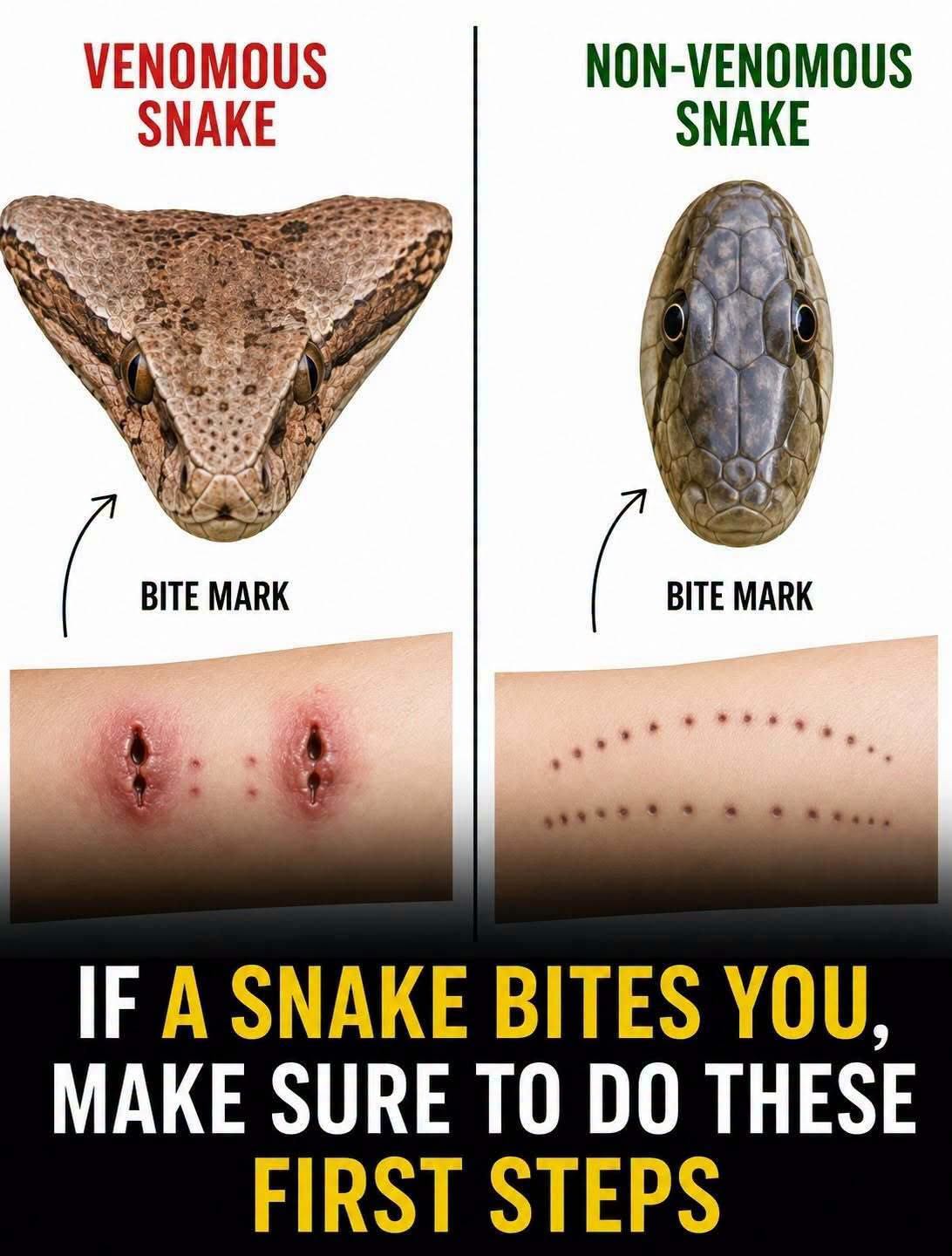
1. Get Medical Help Immediately
Call your local emergency service or arrange prompt transportation to the nearest medical facility.
Do not wait for symptoms to appear. Signs of envenomation can sometimes develop gradually, and medical professionals can monitor the person and provide appropriate treatment.
If possible, keep the injured person still and calm while help is on the way. Avoid unnecessary walking or physical activity.
2. Keep the Bite Area Still
Movement can increase circulation and may contribute to the spread of venom in some types of snake envenomation.
Keep the affected limb as still and comfortable as possible. Follow instructions from emergency medical professionals regarding positioning and transport.
3. Remove Tight Items
Swelling can develop around the bite.
Remove rings, watches, bracelets, tight shoes, or restrictive clothing from the affected limb before significant swelling occurs. Do this gently without manipulating the wound unnecessarily.
4. Keep the Wound Clean
If medical help is not delayed by doing so, gently clean the area with soap and clean water and cover it with a clean, dry dressing.
Do not scrub aggressively or apply household substances, chemicals, creams, or herbal preparations to the bite.
5. Remember What the Snake Looked Like—From a Safe Distance
If you can do so without approaching the snake, try to remember its approximate size, color, markings, or general appearance.
A photograph taken from a safe distance may also be useful if it can be obtained without putting anyone at risk.
Never attempt to catch, kill, handle, or closely approach the snake. A second bite can happen very quickly.
What NOT to Do After a Snake Bite
Several traditional methods can make an injury worse and should be avoided.
Do not:
- Cut or puncture the bite wound.
- Attempt to suck venom from the wound.
- Apply ice directly to the bite.
- Use a tourniquet unless specifically instructed by qualified medical professionals.
- Try to capture or handle the snake.
- Apply alcohol, chemicals, herbs, or other home remedies.
- Delay medical treatment while waiting for symptoms.
- Give medications unless a medical professional advises that they are appropriate.
These measures do not replace professional treatment and may cause additional injury.
Don’t Rely on the Absence of Symptoms
A person may initially feel well after a snake bite. That does not necessarily mean there is no risk.
Depending on the species and circumstances, symptoms can include increasing pain or swelling, weakness, dizziness, vomiting, difficulty breathing, vision changes, bleeding, or other serious effects.
For this reason, prompt medical assessment is important even when symptoms appear mild at first.
How to Reduce the Risk of Snake Bites
If you spend time in areas where snakes may live, a few simple precautions can reduce the chance of an encounter:
- Wear sturdy footwear when walking through grass, brush, or rocky areas.
- Use a flashlight when walking outdoors at night.
- Avoid putting your hands into holes, cracks, woodpiles, or dense vegetation without first checking the area.
- Keep children and pets away from snakes.
- Do not attempt to pick up or move a snake, even if you believe it is harmless.
The Most Important Rule
A snake bite should not be treated as a do-it-yourself medical problem.
Stay calm, minimize movement, avoid potentially harmful home remedies, and seek professional medical care immediately.
If someone is having trouble breathing, losing consciousness, experiencing severe swelling, or showing other signs of a serious reaction, seek emergency medical assistance without delay.
This article is for general educational purposes and does not replace advice from a qualified healthcare professional or emergency medical service. Treatment recommendations can vary depending on the snake species, location, and individual circumstances.