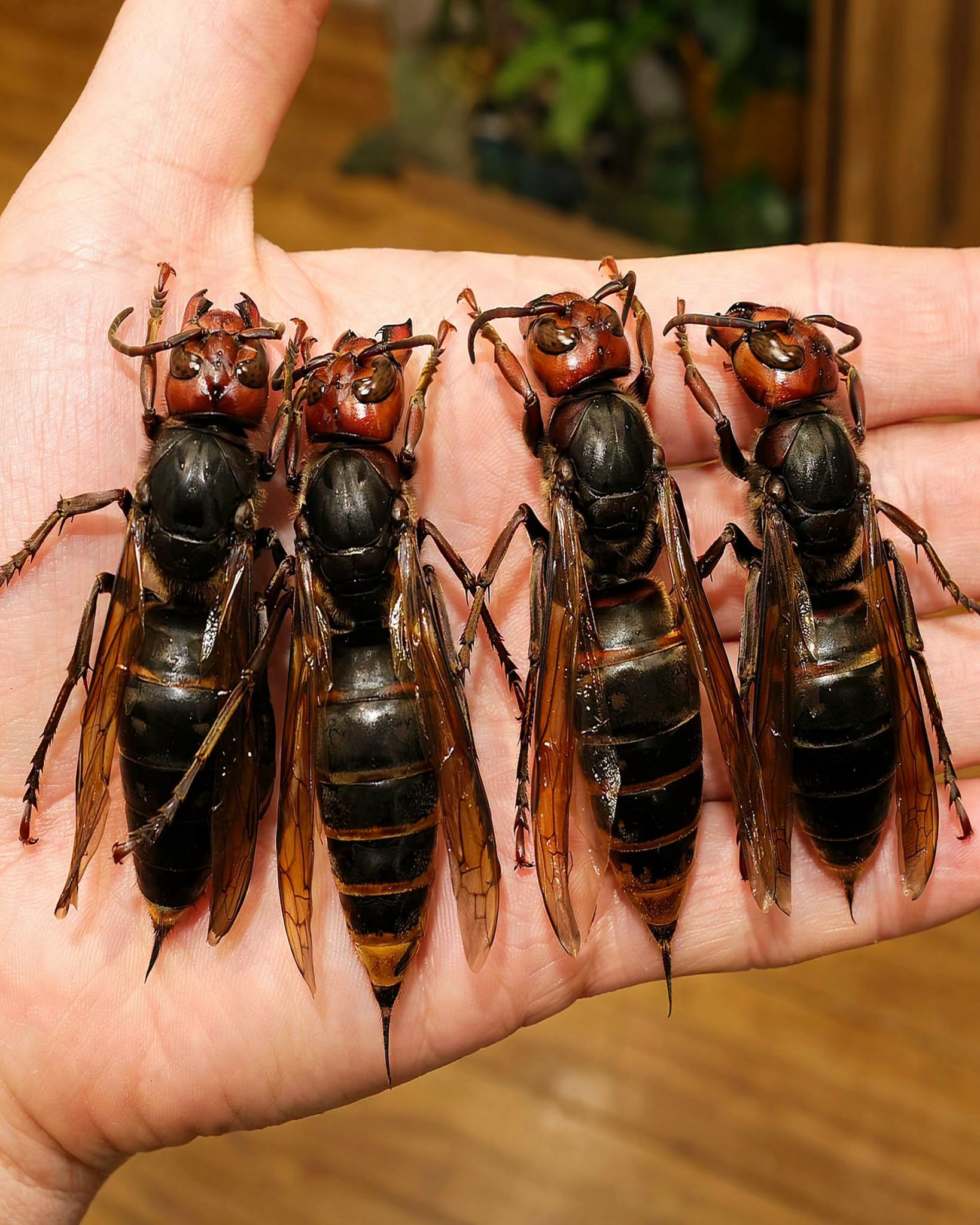
The Giant Hornet That Put North American Ecosystems on Alert
It arrived almost like a rumor.
A huge hornet had been spotted near the Pacific Northwest, and suddenly scientists, farmers, beekeepers, and environmental officials were paying attention.
Its size was startling. Its reputation was even more alarming.
Known scientifically as the northern giant hornet (Vespa mandarinia), the insect became widely known in the media as the “murder hornet.” But the real story isn’t about a monster hunting people.
It’s about an invasive predator capable of attacking something far more important to ecosystems and agriculture: honeybee colonies.
And once scientists realized what they were dealing with, the race to stop it had already begun.
A Hornet Unlike Any Other
The northern giant hornet is the world’s largest hornet species.
Native to parts of Asia, it can reach roughly five centimeters in length, with a large orange-yellow head, a dark-and-yellow body, and an impressive wingspan.
Its appearance alone makes it difficult to mistake for an ordinary wasp.
But size isn’t what concerns entomologists most.
The real concern is what happens when these predators encounter a vulnerable colony of social insects.
Honeybees can become the target of coordinated attacks, particularly when a group of hornets locates a hive.
And that’s where the situation can change dramatically.
The Threat to Honeybees
Keep reading…