

She Never Lost Sight of Where She Came From
Parton’s fame eventually became enormous.
So did her business empire.
But her connection to her Tennessee roots remained central to her identity.
Dollywood became one of the most recognizable attractions in the Smoky Mountains, while the Dollywood Foundation allowed her to turn her success into long-term charitable work.
Her most famous philanthropic project, Dolly Parton’s Imagination Library, was inspired partly by her father, who never learned to read or write.
The program provides books to young children, allowing families to receive free books from birth through the preschool years.
It became one of the most enduring parts of Parton’s legacy.
The official Parton organization has continued promoting literacy initiatives even after her death, including a September 2026 “Give Like Dolly Day” focused on supporting children and honoring her charitable philosophy.
For Parton, philanthropy wasn’t an occasional project.
It was part of the way she understood success.
A Marriage That Stayed Mostly Out of the Spotlight
Behind the rhinestones, recording studios, movie sets, and television appearances was a private life that Parton protected carefully.
She married Carl Dean in 1966.
Unlike his famous wife, Dean largely stayed away from public attention.
Parton often joked about their long marriage, but she also made clear that Dean supported her career while maintaining a life of his own.
Their relationship lasted nearly six decades.
Dean died on March 3, 2025.
Parton later described their relationship as an enduring love story and acknowledged how difficult his death had been.
His passing also became part of the difficult period that preceded Parton’s own final year.
She had spoken about putting her own health needs aside while caring for him.
She Kept Working Even When Her Health Changed
Parton’s final years demonstrated the same determination that had characterized her career from the beginning.
In 2025, health problems forced her to postpone a planned Las Vegas residency.
She later canceled the rescheduled performances, explaining that she was receiving treatment and needed more time to recover. In May 2026, she told fans that she was responding well to medication and treatment and was improving.
Even then, Parton resisted the idea that slowing down meant giving up.
She continued discussing new creative possibilities and remained interested in finding ways to connect with audiences.
Just one day before her death, reports were still describing her as someone focused on her health while thinking about how she might continue sharing her work with fans.
Then came the announcement nobody wanted to hear.
On August 25, her family confirmed that she was gone.
A Legacy Bigger Than the Music
Parton’s career earned her some of the entertainment industry’s highest honors.
She won multiple Grammy Awards and Country Music Association honors, received an Emmy, earned Academy Award nominations, and was inducted into the Country Music Hall of Fame.
She also received the National Medal of Arts and Kennedy Center Honors.
But awards only tell part of the story.
Parton’s influence came from the unusual combination of qualities she brought together.
She was a songwriter who could turn personal memories into universal stories.
She was a country performer who became a mainstream entertainment figure without abandoning her roots.
She was a businesswoman who built a major attraction in her home state.
And she was a philanthropist who used her success to promote children’s literacy.
Her life also demonstrated the power of reinvention.
She moved from rural Tennessee to Nashville.
From songwriter to recording artist.
From television performer to movie star.
From country celebrity to global cultural figure.
And throughout those transformations, she remained recognizably Dolly.
The Woman Behind the Rhinestones
Parton’s appearance was always part of her public image.
She famously embraced glamorous clothing, big hair, bright makeup, and an unmistakable personal style.
But she was also quick to joke about the image herself.
That sense of humor helped make her unusual in an entertainment industry that often takes celebrity very seriously.
She could laugh at herself while still taking her craft seriously.
And beneath the glamour was a songwriter who repeatedly returned to simple themes: family, home, poverty, love, heartbreak, faith, ambition, and hope.
Those themes helped make her music understandable to people who had never lived the life she described.
The Final Chapter
In one of her later reflections on turning 80, Parton spoke about age without treating it as a reason to stop dreaming.
She said she felt as though she was just getting started.
That mindset remained visible until the end.
Even after health problems forced her to slow down, she continued talking about future projects and unfinished dreams.
Now those dreams belong to the legacy she leaves behind.
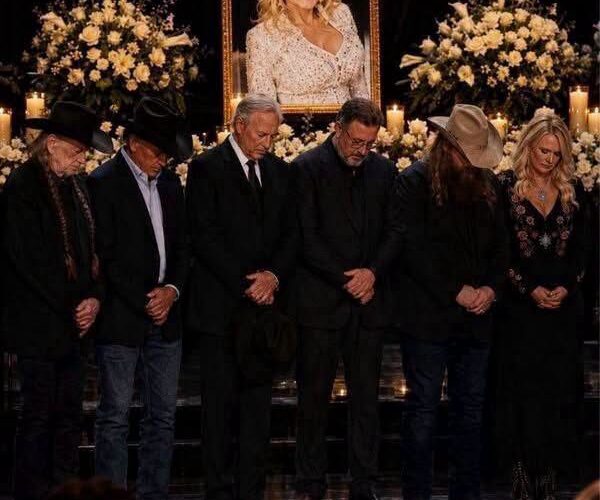
Her family has asked fans to remember her through the things she cared about.
Her music.
Her stories.
Her generosity.
And especially the children whose lives have been touched by books sent through the Imagination Library.
Parton’s official announcement described her as a global icon and humanitarian whose seven-decade career inspired generations.
That may be the simplest way to understand the scale of her life.
Dolly Parton came from a poor family in Tennessee.
She picked up a guitar.
She started writing songs.
And then she spent the next seven decades showing the world how far a dream could travel.
Her voice is now silent.
But the songs remain.
The stories remain.
The books remain.
And the dreams she helped generations of people believe in will continue long after her final curtain.