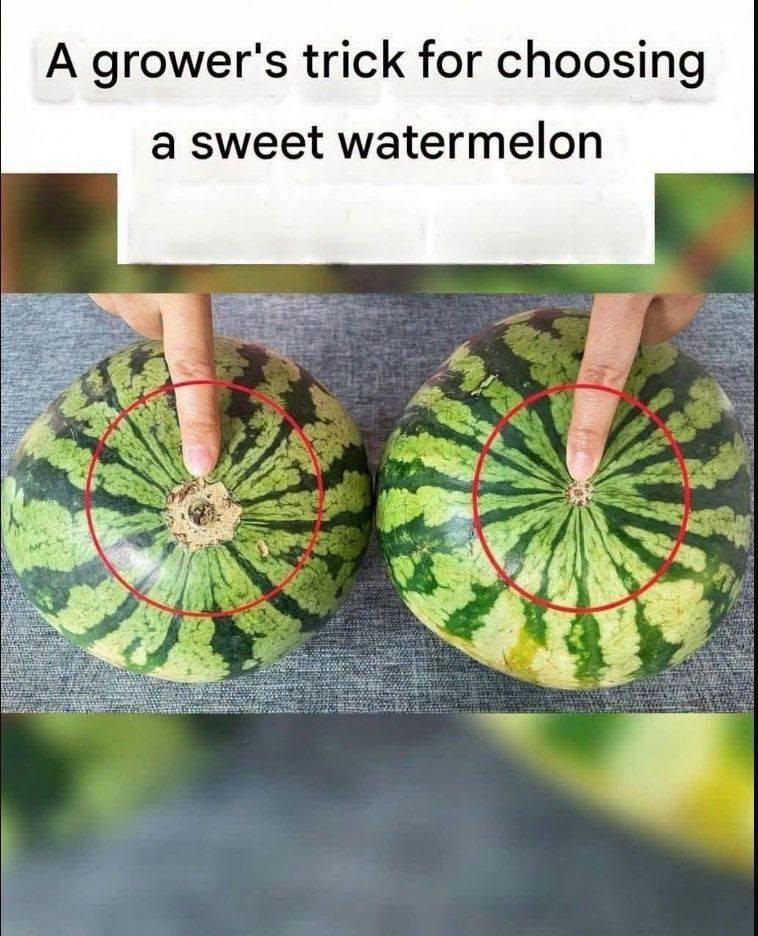
A great watermelon can make a summer meal feel complete, but choosing one at the store is not always obvious. The good news is that you do not need a special trick or a perfect ear for tapping fruit. A few practical signs can help you make a better choice and avoid spending money on a melon that turns out bland, dry, or overripe.
No single clue guarantees the sweetest watermelon in the bin. Instead, the smartest approach is to look at the fruit from several angles: color, weight, shape, texture, and visible condition.
Start With the Field Spot
One of the easiest places to begin is the pale patch on the rind. This is the area where the watermelon rested on the ground as it grew.
A creamy yellow or buttery-looking field spot is often a better sign of maturity than a spot that is very white, faint, or barely visible. It does not need to look perfect. In fact, that patch is a normal part of how the fruit develops in the field.