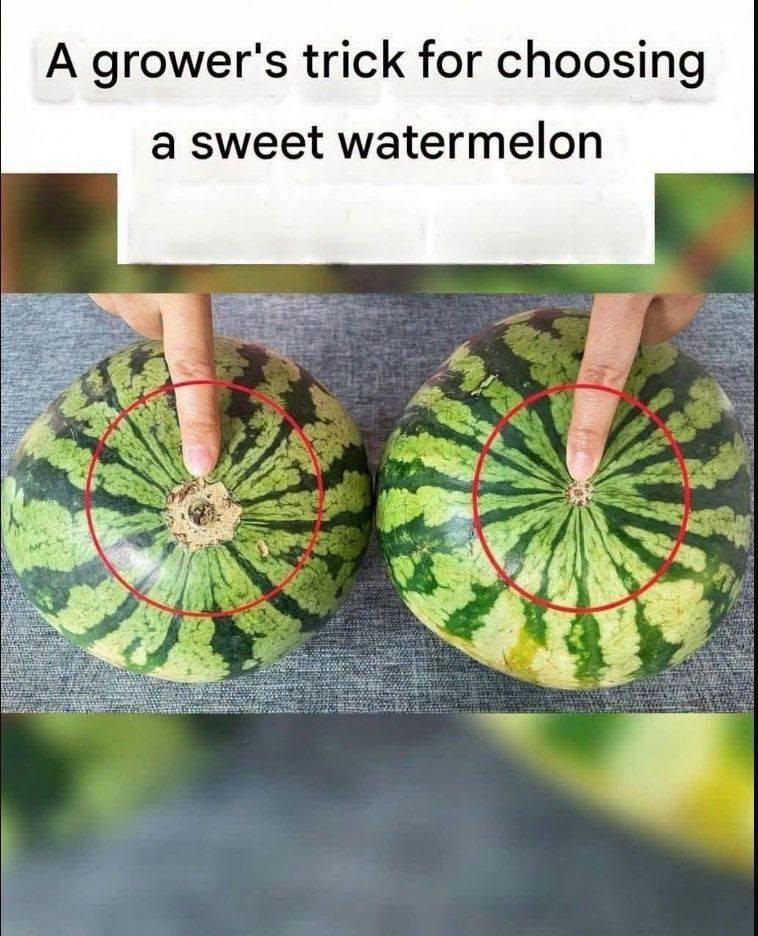
While checking the field spot, also look at the overall shape. A good watermelon should appear fairly even for its variety. Some are round, while others are more elongated, but the fruit should look balanced rather than lopsided or poorly developed.
Skip melons with serious dents, deep cuts, leaking areas, mold, or soft spots. Small surface scratches are usually less important and may simply come from normal handling during harvest or transport.
Use Weight, Rind, and Sound Together
Weight is one of the most useful clues in the produce aisle. Compare watermelons that are about the same size and pick the one that feels heavier. Because watermelon contains a lot of water, a heavier fruit may offer more juicy flesh.
If you are lifting a large watermelon, use both hands and avoid straining your back or wrists. A good grocery choice should not come with an injury.
The rind can also tell you something. A ripe watermelon usually has a firm skin that is not overly shiny. On striped varieties, the contrast between the stripes should be reasonably clear. When gently pressed, the rind should feel firm rather than soft or unusually yielding.
You may also notice brown, rough, web-like lines on the surface. These markings can occur naturally as the fruit grows and are not automatically a sign of poor quality. What matters more is whether the melon shows decay, damage, or softening.
Many shoppers tap watermelon and listen for the sound. A mature melon may produce a deeper, more resonant tone, while a flatter sound can sometimes suggest a less appealing texture. Still, this method is not always easy to judge. Treat sound as one clue, not the final answer.
What Readers Should Know
If a piece of stem is still attached, a dry, brownish stem can be consistent with a watermelon that matured before being separated from the plant. A green stem may suggest it was harvested earlier. However, stems are often removed or changed during harvesting, shipping, and display, so the absence of a stem should not automatically rule out an otherwise promising melon.
Once the watermelon is cut, the inside should have a rich color appropriate for its variety, along with a firm, juicy texture. If the flesh looks unusually watery, mushy, discolored, or grainy, it may not deliver the crisp bite most shoppers want.
Cut watermelon should be refrigerated promptly in a covered container and kept chilled to help preserve quality. This also helps reduce food waste, which matters when grocery prices make every purchase count.
For a quick shopping routine, look for a creamy yellow field spot, an even shape, firm skin, good weight for its size, and no major signs of damage. Choosing well is less about one secret test and more about combining several simple clues before you buy.
The next time you are standing in front of a pile of watermelons, slow down for a moment. A better pick may be hiding in plain sight.