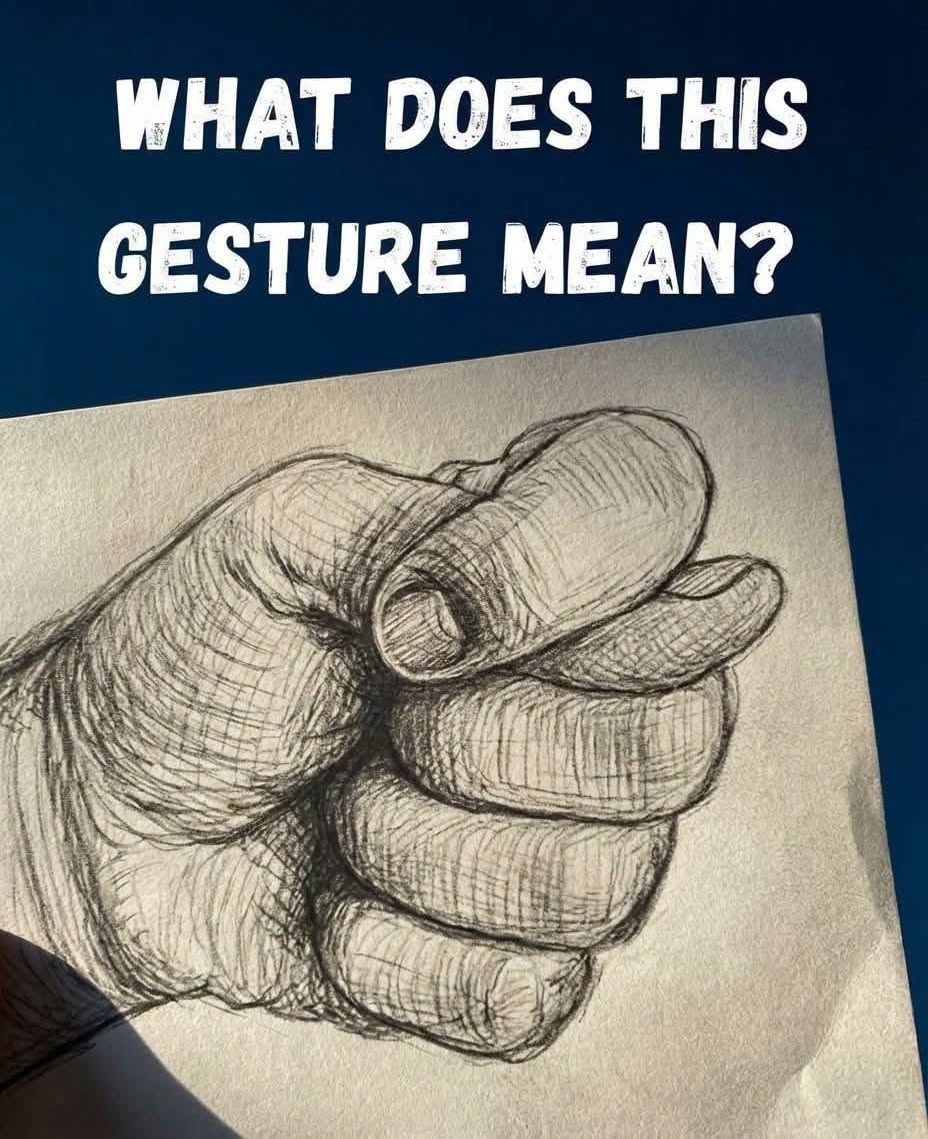
A clenched hand can seem ordinary until you notice one small detail: the thumb pressed between the index and middle fingers. That tiny change turns a simple fist into a gesture with a long and complicated past.
Often known as the fig gesture, this hand sign has appeared across different cultures and time periods with meanings that ranged from refusal and defiance to protection and playful teasing. Like many old gestures, its meaning depended heavily on who was using it, where it was used, and who was watching.
A Small Sign With a Long History
Before modern messaging, emojis, or even broad literacy, people often used body language to communicate what they could not say openly. A hand movement could carry a warning, a joke, an insult, or a quiet boundary.
The fig gesture fit neatly into that world. It was compact, easy to hide, and understood by those familiar with it. In some settings, it could express disagreement or mild defiance without forcing a public confrontation.