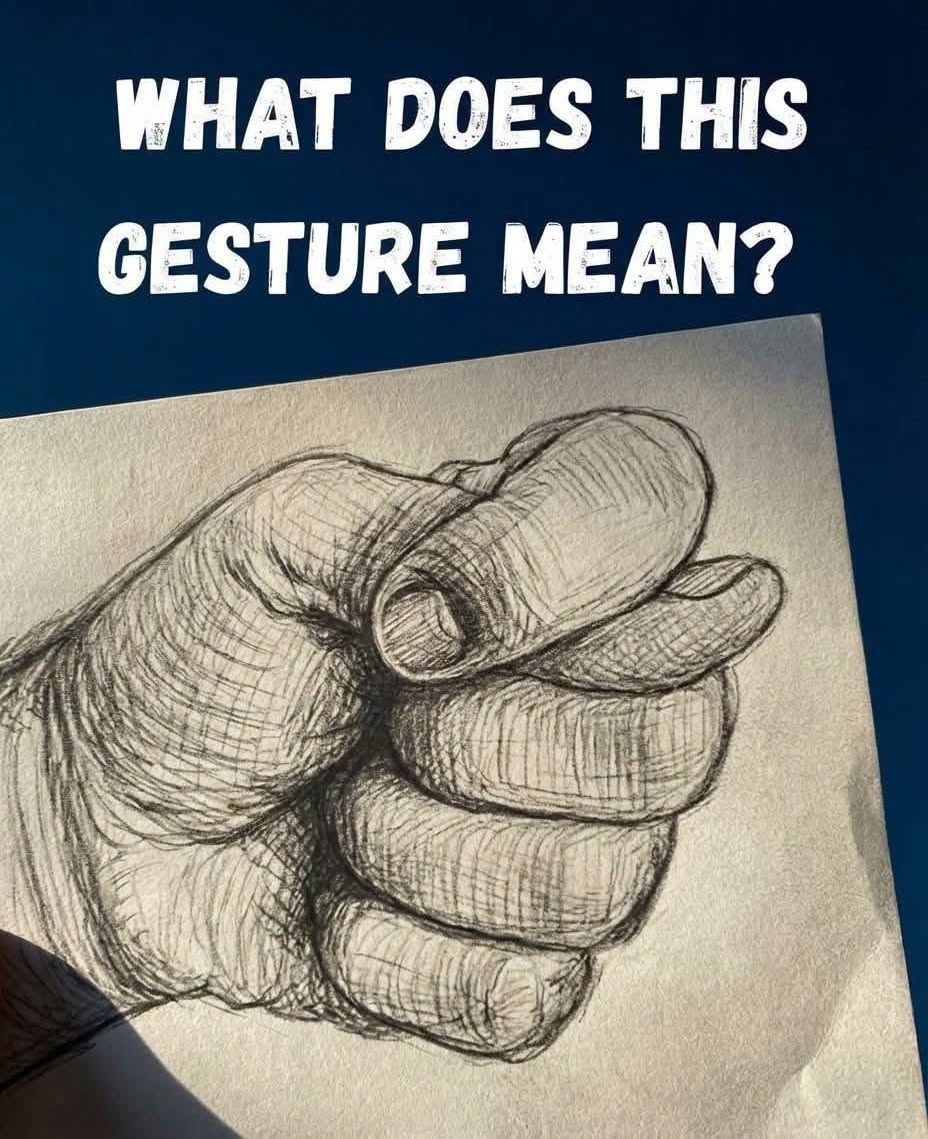
That subtlety mattered in societies where manners and public composure carried serious weight. In parts of 19th-century Europe, for example, a person could use a discreet gesture to push back, reject an idea, or signal discomfort while still appearing outwardly controlled.
From Social Signal to Protective Charm
The gesture was not only used in everyday communication. In some communities, it also developed a symbolic or superstitious role. People believed it could help ward off envy, bad luck, or unwanted attention.
Used this way, the hand sign functioned almost like a small protective charm. It could be made quietly during uncertain moments, departures, or situations where someone wanted to avoid misfortune without drawing attention.
Over time, its harder edges softened in certain families and communities. What may once have carried sharper social meaning could become part of joking, teasing, or affectionate family rituals. Older relatives might pass it to children through games, humor, or small moments of shared understanding.
The Bigger Picture
The history of the fig gesture is a reminder that communication has never been limited to words. Long before smartphones and reaction buttons, people had rich systems of silent expression that helped them navigate public life, private emotions, and social expectations.
Its meaning is not universal today, and in some places it may be unfamiliar or interpreted differently. That is part of what makes old gestures so interesting: they travel, change, fade, and sometimes survive in unexpected ways.
A simple hand sign can carry centuries of meaning, if you know where to look.