In our local cemetery, there is a grave covered by something strange.
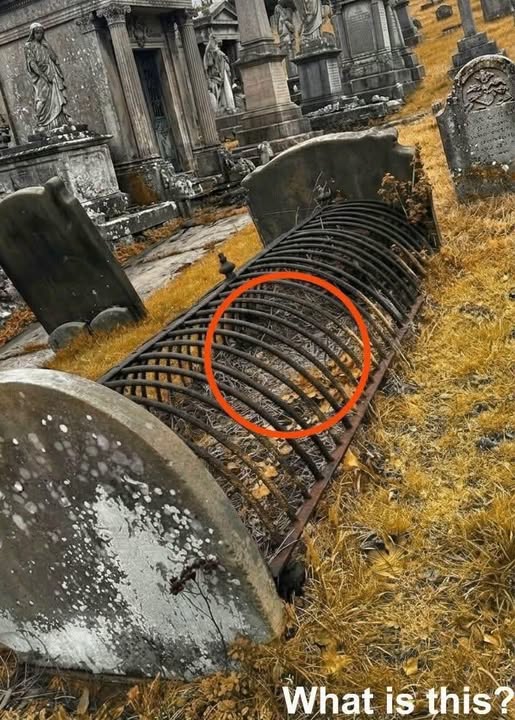
At first glance, it looks like an ordinary grave. But then you notice the iron bars. Thick, rusted metal surrounds the tomb, forming a cage over the earth beneath it. It looks less like a memorial and more like a prison built around someone who has already died.
And once you notice it, you can’t stop thinking about it.
Why would anyone go to such lengths to lock a grave behind iron bars? What could possibly be so dangerous about a dead body that someone would need to protect it this way?
You ask an old cemetery worker about it. He pauses for a moment, glances toward the strange grave, and lowers his voice.
Then he says something you won’t forget.
“It’s not to keep something inside… it’s to stop someone from getting in.”
That night, curiosity gets the better of you. You return home, open your phone, and begin searching for the name of this bizarre structure. At first, the results seem almost unbelievable. But the deeper you dig, the darker the history becomes.
The name of this strange iron cage is a mortsafe.
And its existence reveals a disturbing chapter of history when even the dead were not safe from the living.
Mortsafes first appeared in the late 18th and early 19th centuries, during a time when medical schools were expanding and surgeons desperately needed human bodies to study. Anatomy was becoming essential to medical education, but obtaining legally available cadavers was extremely difficult. The law allowed only a limited supply, leaving medical institutions hungry for more bodies.
And where there was desperation, a gruesome business began to flourish.
Grave robbers known as “resurrection men” discovered that freshly buried bodies could be worth a fortune. Under the cover of darkness, they crept into cemeteries, dug into newly filled graves, and dragged the dead from their resting places. The bodies were then sold to anatomy schools and surgeons, often for considerable sums of money.
 Up Next: Page 2 of 3
By morning, the thieves could be gone, leaving grieving families with the...
Imagine burying your mother, father, child, or spouse, believing you had finally given them peace, only to discover that someone had secretly...
Continue Reading