The Kansas Rancher Who Bet on a Windbreak Forest—and Ended Up Protecting an Entire Town
In Miller’s Bend, Kansas, ranching wasn’t just a job—it was identity. People measured a neighbor by the condition of his pasture, the strength of his herd, and how well he could endure the kind of wind that never seemed to rest. For Tom Whitaker, that wind became more than an annoyance. It became a warning.
After his wife, Rachel, passed away, the Whitaker ranch fell into a quiet that felt heavier than any drought. Tom was left raising his daughter, Emily, while trying to keep a struggling operation afloat. The grass wasn’t holding like it used to. The soil seemed thinner every season. And each spring, the Kansas gusts carried away more topsoil—stealing the ranch’s future one gritty storm at a time.
While neighboring ranchers stayed the course—more cattle, more grazing, more of the same—Tom went in the opposite direction. He started reading about soil conservation, erosion control, and windbreak trees. He tracked weather patterns, studied what drought does to pasture health, and learned how a farm can lose productivity long before it “looks” like a disaster.
A Risky Decision That Looked Like Financial Suicide
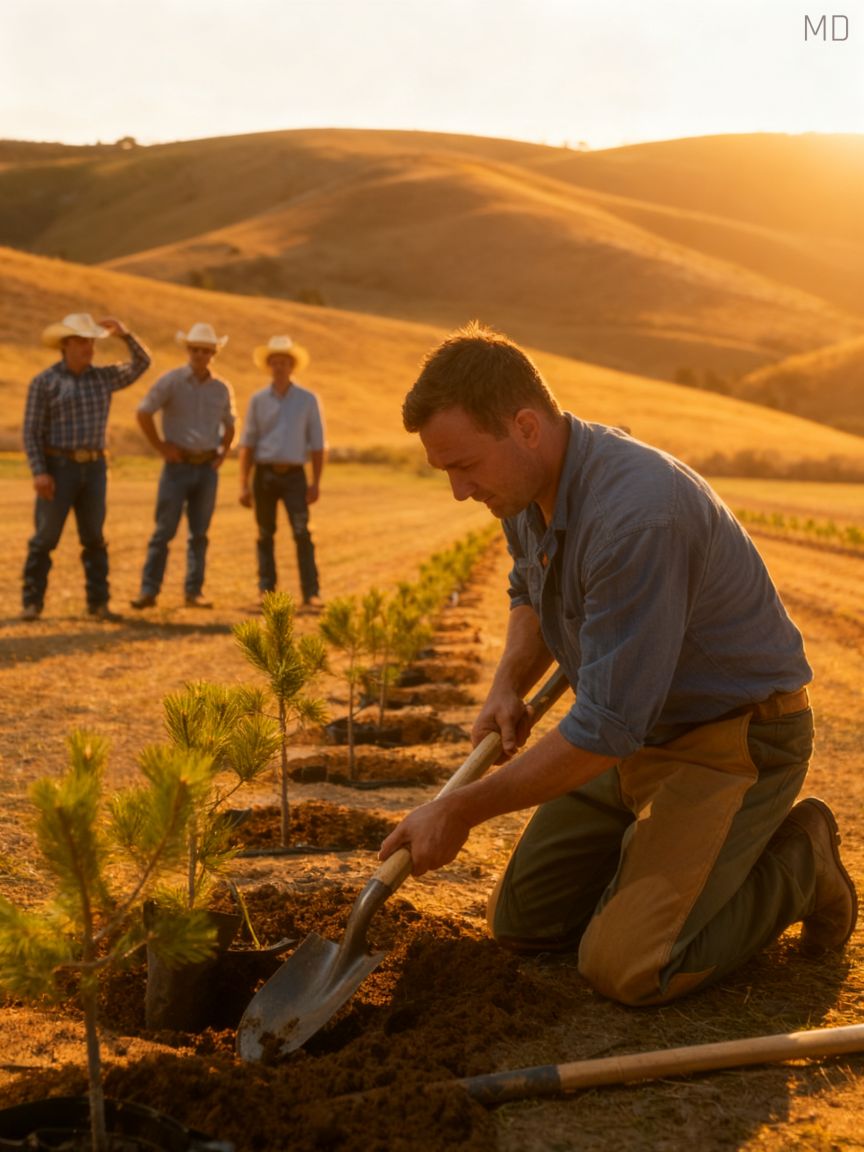
In 1982, Tom made a choice that turned him into the county’s favorite punchline: he took forty acres of valuable grazing land and planted pine seedlings—row after row—right where cattle should’ve been feeding.