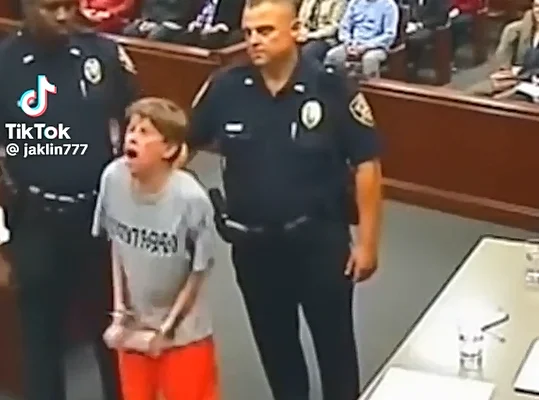
That question is part of a much larger conversation about juvenile justice. Courts are designed to weigh facts, responsibility, public safety, and the law. But cases involving children often force communities to confront an added issue: how young a person can be while still receiving a punishment that can define an entire lifetime.
For the people who witnessed the sentencing, the emotional impact appeared immediate. Some reportedly looked away. Others cried. The room was left with the image of a child realizing that the future he imagined may no longer exist in the same way.
The Bigger Picture
Stories like this draw attention because they sit at the intersection of law, childhood, punishment, and public responsibility. A sentence of 50 years is not just a number on paper. For a 12-year-old, it represents nearly everything between childhood and old age.
Juvenile cases also raise difficult questions for families, schools, courts, and communities. They involve legal process, victim impact, accountability, rehabilitation, and the long-term cost of incarceration. Those issues are complex, and they cannot be fully answered by one courtroom moment alone.
Still, the reaction described in the courtroom is why the story lingers. It is one thing to read a sentence in a document. It is another to watch a child understand it in real time.
Whether readers see the moment as justice, tragedy, or something in between, it leaves a difficult question worth sitting with: what should accountability look like when the person being punished is still a child?