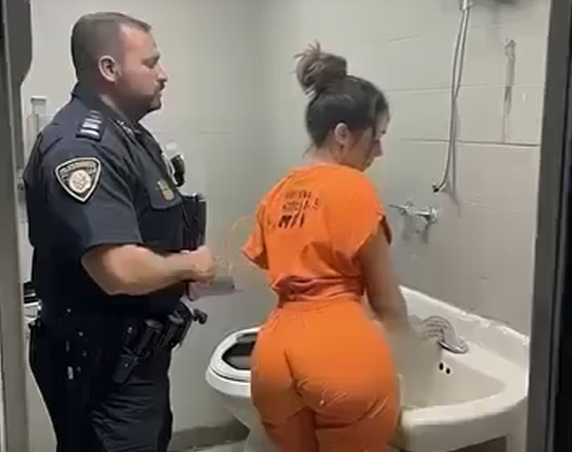
That kind of public judgment can move fast, especially when video is involved. In cases involving law enforcement, the stakes are even higher because police officers are expected to follow procedure, protect evidence, and act without personal bias.
The Hidden Footage Changed the Conversation
Inside the holding area, the tone of the story shifted. The officer, no longer in control of the scene, paced the room before sitting on a metal bench. He then pulled out a small photograph that had clearly been carried for a long time.
The photograph was later identified as being of his young daughter. When investigators reviewed the footage, they were reportedly looking for more evidence tied to the accusations against him. Instead, they found a private moment that suggested his actions may have been driven by fear for his child rather than personal gain.
That did not erase the allegations. It did, however, create a more difficult question: if a person in authority believes someone they love is in danger, does that explain breaking procedure, or does it make the violation even more serious?
The Bigger Picture
The case quickly became about more than one officer. It raised uncomfortable issues around police accountability, due process, workplace ethics, and the limits of personal loyalty in a public role.
Some observers argued that an officer’s duty must come first, even when family is involved. From that view, allowing personal fear to interfere with an investigation can damage public confidence and put others at risk.
Others saw the footage as evidence of a parent caught in an impossible position. They did not necessarily excuse the alleged obstruction, but they believed the public should consider the pressure he may have been under before reducing the case to a simple story of corruption.
Legal and ethics discussions around cases like this often come back to the same point: motive matters, but it does not automatically remove responsibility. Investigators and courts still have to examine the facts, the actions taken, and whether anyone was harmed or placed in danger.
What makes the footage so compelling is that it shows a moment the officer never expected anyone to see. Whether people view him as a man who abused his authority or a father who panicked under pressure, the case is a reminder that public judgment often arrives before the full story does.
As the proceedings continue, the question remains difficult: where should the line be drawn when duty, law, and family collide?