There were a few moments that seemed odd in hindsight. Some evenings, their son appeared much sleepier than usual. At times, he slept heavily through dinner even after already having his afternoon nap.
Megan had explanations that sounded reasonable. He had played outside. He had fought sleep earlier. He was simply worn out. With no obvious reason to suspect anything else, the parents accepted it.
A Silent Camera and a Handwritten Warning
The family also had a regular delivery driver, later identified in the account as Andre. He had been bringing packages to the home for months, often speaking toward the Ring camera even though its microphone did not work.
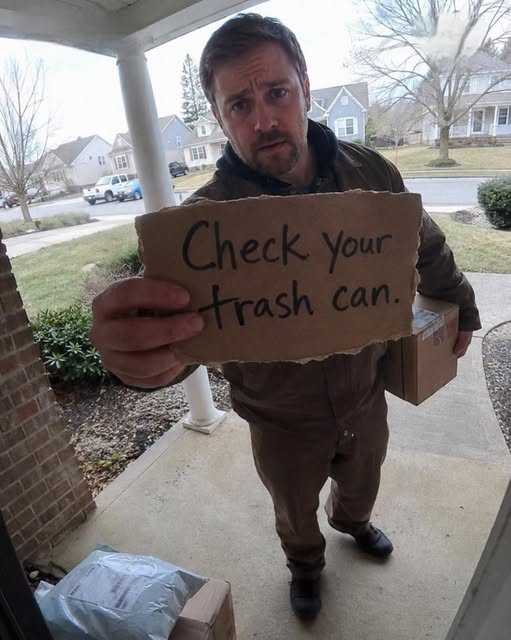
That Thursday, Andre dropped off a package and started back toward his vehicle. Then he stopped. He looked toward the trash cans, returned to the porch, grabbed a piece of cardboard, and wrote a short message with a marker.
He held the cardboard up to the camera so the parents could read it.
The mother, alarmed by what she saw, replayed the footage and called Megan to ask how her son was doing. Megan said he had eaten lunch and was asleep.
The answer did not calm her. She decided to leave work early.
When the parents got home, they checked the trash. Inside, they found several medication containers, including children’s cough medicine and an over-the-counter product associated with drowsiness. The parents did not recognize the medications as anything they had given their child.
One pharmacy bag appeared to have Megan’s first name on it, according to the account.
That was the moment the situation moved from unsettling to urgent.
Why This Matters
The mother contacted the child’s pediatrician and explained that her son had seemed unusually tired in recent days. The doctor advised the parents to check whether he could be awakened normally and recommended immediate medical evaluation.
When the mother went to his crib, he appeared deeply asleep. She touched him and called his name, but he barely responded, which was not normal for him.
The parents took him to the emergency department. Medical staff evaluated his breathing, heart rate, temperature, and neurological responses. Blood and urine testing were also performed.
Doctors determined that the child was stable but had signs consistent with exposure to a sedating medication, according to the account. The family was told more testing would be needed to identify the exact substance involved.
Police later became involved after the parents provided the Ring footage, photographs of the medication containers, and information about Megan. Investigators reportedly found additional children’s medication among Megan’s belongings.
According to the account, Megan first denied giving the child medication. Her explanation changed during questioning. She eventually admitted that she had given him medication to make him easier to settle for sleep.
She reportedly said the first time happened after he resisted a nap and cried for a long period. After seeing that he became sleepy, she repeated it. She also said she had not intended to seriously harm him.
For the parents, that explanation did not make the discovery easier to accept. Their concern was not only one bad decision, but the possibility that it had happened repeatedly while they believed their child was receiving normal care.
Andre later explained what he had seen. According to the account, he noticed Megan carrying a bag toward the trash. As she placed it inside, a medication bottle fell out. He saw her quickly pick it up and hide it beneath other garbage.
He did not know exactly what was happening, but he felt it was unusual enough that the family should be warned. Because the camera’s microphone was broken, he used the cardboard message instead.
The boy was monitored at the hospital and eventually recovered. Doctors advised the family to continue follow-up care with his pediatrician and watch for any further concerns.
The emotional impact lasted longer. The mother began replaying the earlier signs in her mind, wondering whether she should have questioned his unusual sleepiness sooner. Her husband reminded her that they had trusted someone who had appeared responsible and caring.
The responsibility for giving medication to a child without a parent’s knowledge did not belong to them simply because they had not suspected it.
Weeks later, another package arrived. By then, the family had repaired the camera microphone.
Andre stood at the door and looked toward the camera. “I hope the little guy is doing okay,” he said.
The father answered through the intercom, and Andre smiled before heading back to his vehicle.
For months, the family had laughed about the driver who kept talking to a camera that could not talk back. They never expected that his effort to communicate would become the reason they looked closer.
It is a reminder that changes in a child’s behavior, especially unusual sleepiness or difficulty waking, deserve attention — and that sometimes a small warning is enough to prevent a much bigger tragedy.