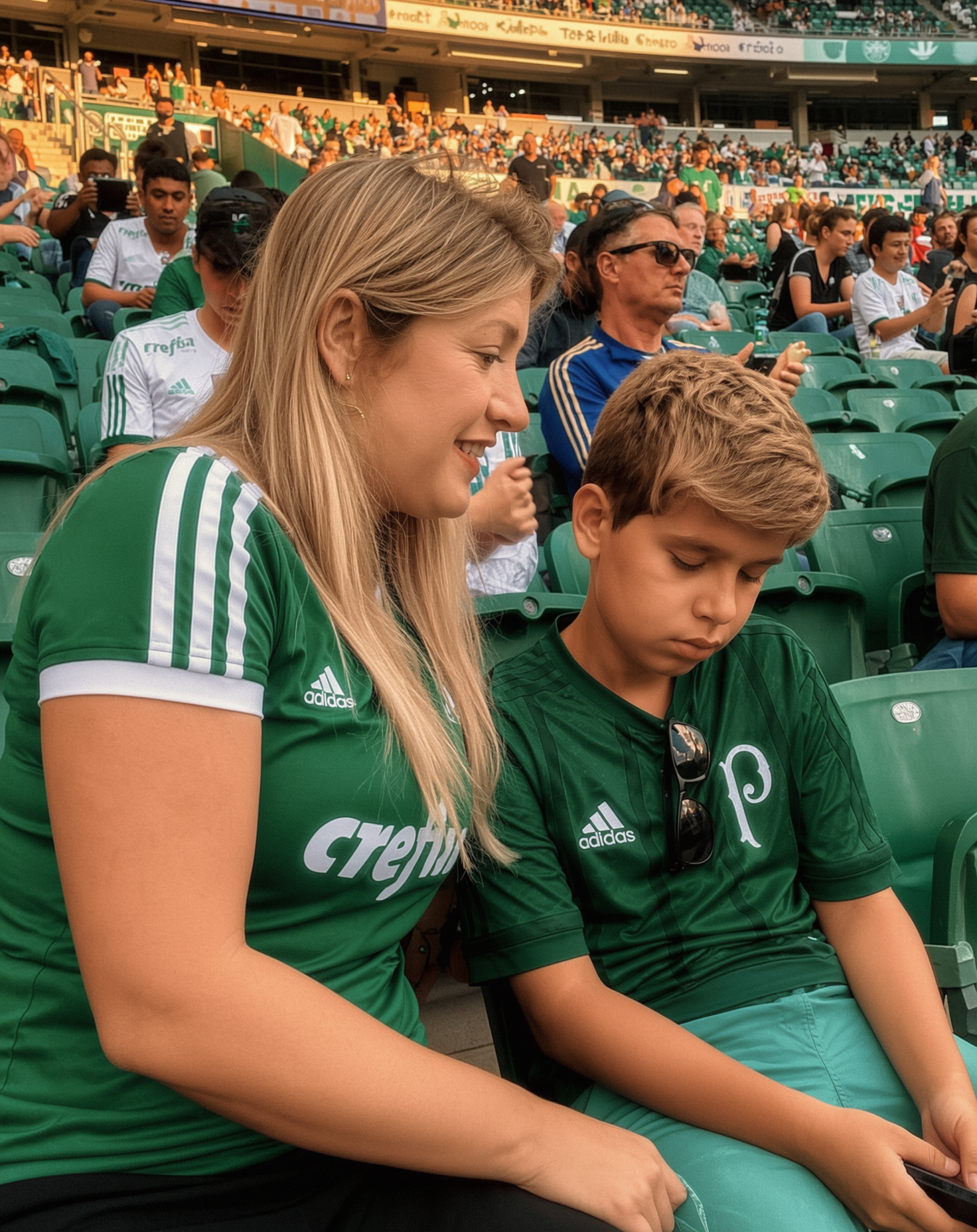
The boy flinched. His mother stood up immediately, placing herself between her child and the stranger.
With tears in her eyes, she explained what no one around them had known. Her son, Eli, could not see the game. He had lost most of his vision three months earlier, and he was scheduled for surgery the following morning.
She was not trying to distract anyone. She was helping him experience the game through whispered descriptions and touch. The game mattered because Eli’s late father had loved that team, and his mother wanted him to feel close to his dad one more time before the operation.
The energy in the section shifted almost instantly.
What Looked Strange Was Actually Love
The fan who had yelled reportedly went quiet and apologized, visibly ashamed. People nearby, who had moments earlier been unsure of what they were watching, began to understand.
One person explained that the movements looked like a type of tactile communication. Instead of disrupting the game, the mother was translating it into a form her son could feel.
From there, Section 112 changed. Someone bought Eli a warm pretzel. Another fan helped describe plays. People lowered their voices when needed, while still keeping the excitement of the stadium alive around him.
Then came the moment that made the night unforgettable. An old photo of Eli with his father was shared, and during a stadium “fan memories” segment, the image appeared on the big screen with a tribute to his dad.
When Eli’s mother pressed the message into his palm — “They put Daddy on the screen” — he smiled as the crowd cheered.
Why This Matters
The story resonated because it showed how quickly people can misread a situation when they do not know the full context. What some saw as unusual behavior was actually a mother finding a way for her child to participate in a moment that meant something deeply personal.
It also pointed to the practical challenges families can face around medical care. By the end of the night, strangers had raised money to help Paula with Eli’s recovery, medicine, transportation, and missed work after surgery. The man who had first shouted at them later offered rides and meals as a way to make amends.
The next day, Paula posted from the hospital that Eli’s surgery had gone well.
For everyone who witnessed it, the lesson was simple but lasting: sometimes the thing we are quickest to judge is someone else’s way of getting through the hardest day of their life.
It is a reminder worth carrying into every crowded place, every tense moment, and every story we do not yet fully understand.