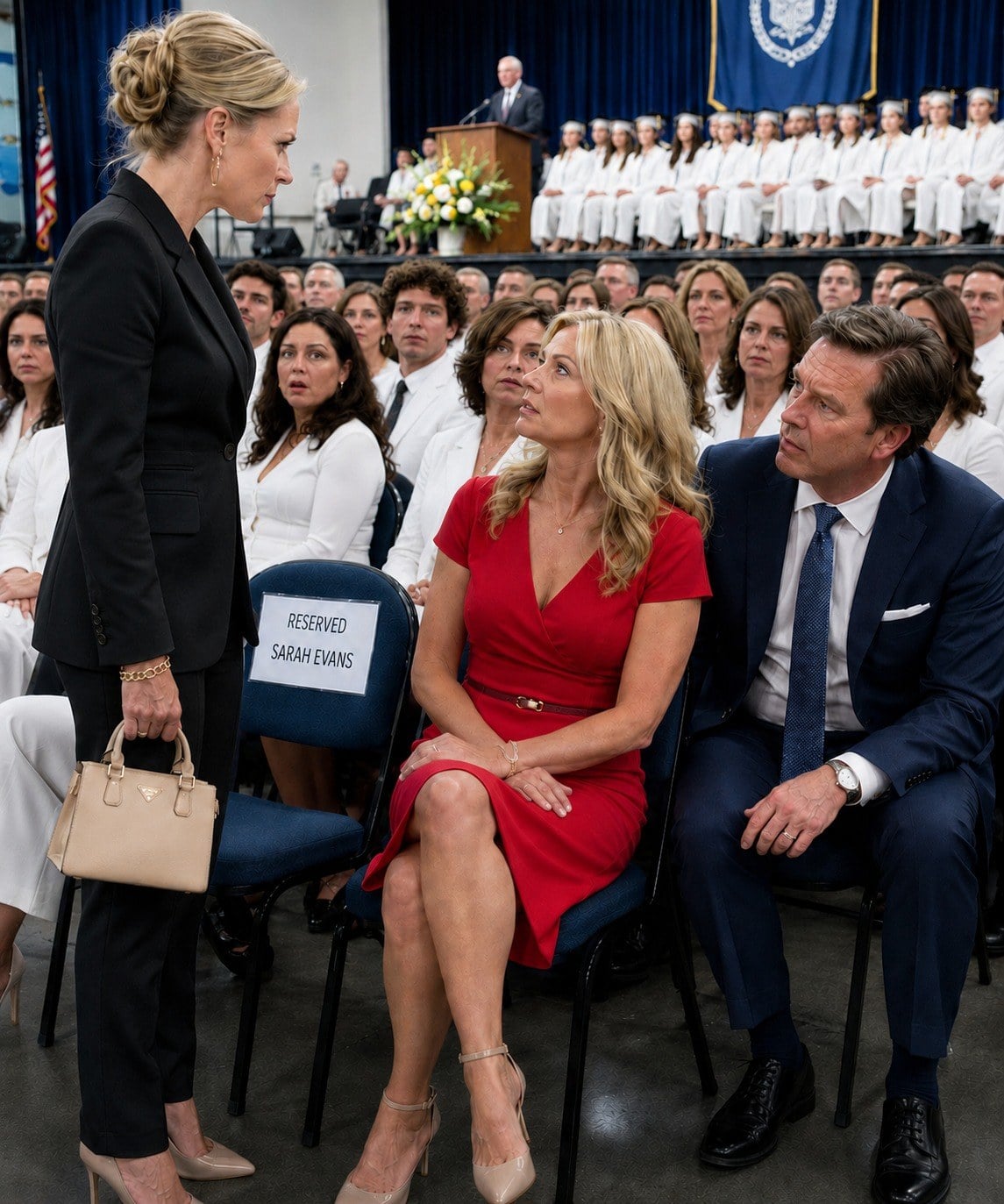
From the back of the room, she watched as Michael began to talk about the parts of his childhood that were not visible in a graduation program. He remembered early mornings in a cold apartment. He remembered the smell of disinfectant on his mother’s scrubs. Most of all, he remembered who kept showing up when it mattered.
Those details changed the mood in the room. The speech was not angry, and it was not dramatic for the sake of attention. It was direct. Michael made it clear that his mother’s sacrifices had not gone unnoticed.
The Moment the Room Turned
As Michael continued, the crowd looked toward his mother. She said she did not feel pitied. She felt recognized.
That distinction is what gives the story its emotional weight. For years, her work had apparently been quiet and practical: choosing stability, keeping routines, working in scrubs, and carrying responsibilities without asking for applause.
In that moment, the public image others had tried to present could not compete with Michael’s own memory of his upbringing. Chloe’s polished appearance and David’s carefully presented pride were no longer the center of the story. Michael had made it about the person he believed had carried him through.
The Bigger Picture
Family milestones can expose old wounds, especially in blended families where roles, recognition, and boundaries are complicated. A seat at a ceremony may seem small from the outside, but for a parent who has spent years doing the unseen work, it can feel like a symbol of whether that work is valued.
What stands out here is that Michael did not need a confrontation to make his point. He used his own voice, at his own graduation, to name the person whose support shaped his journey.
The mother may not have received the seat she wanted, but she left with something harder to take away: her son’s public acknowledgment of the truth he had lived.
Sometimes the most powerful recognition comes from the person who saw everything all along.