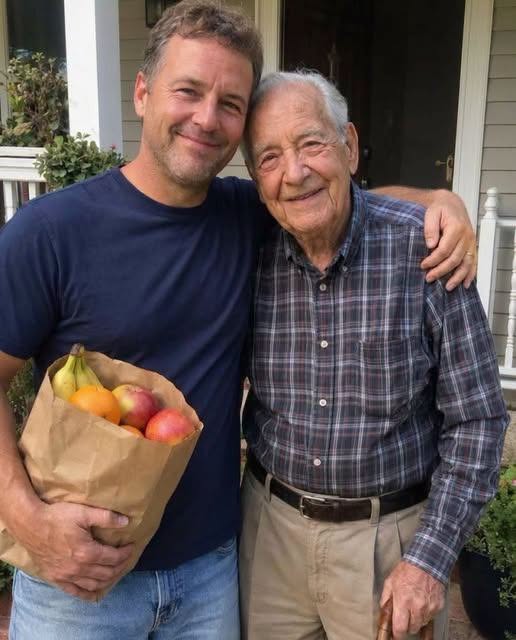
The Call After the Funeral
Three days after Ezra’s funeral, his lawyer called and asked for a meeting.
On the desk sat a battered brown suitcase. Its corners were scuffed, and one latch had been repaired with wire. The lawyer explained that Ezra had left very specific instructions: the suitcase was to go to the neighbor who had shown up every Sunday for twelve years.
Inside were envelopes arranged by year. Each one had the neighbor’s name written on the front.
The first letter described the day they met. Ezra remembered how his groceries were carried inside without making him feel weak or helpless. Another letter recalled a stormy afternoon when his neighbor stayed longer than usual because Ezra hated being alone when thunder shook the windows.
There were letters about small things that had nearly been forgotten: a birthday cake left by the door, a quiet afternoon listening to stories about Margaret, a few extra minutes of company on days that otherwise felt empty.
What had seemed like simple kindness had been carefully remembered, dated, and saved.
A Gift With a Purpose
At the bottom of the suitcase was a bank document and one final letter. Ezra had left behind a modest amount of savings, asking that it be used to help other older residents who were living in isolation.
The gift was not a mansion, a hidden fortune, or a life-changing inheritance. It was more personal than that. It was a final request from a man who understood how much regular human contact can matter when the world has become smaller.
Before any plans could be made, Ezra’s nephew arrived at the neighbor’s home. He accused the neighbor of manipulating his uncle and demanded the suitcase.
The lawyer’s documents showed that Ezra’s wishes were clear. The legal paperwork protected the financial gift, but the neighbor refused to hand over the private letters. Those belonged to Ezra’s memory, not to a family dispute.
The confrontation was painful, but it also made Ezra’s message harder to ignore. A person can have relatives and still feel deeply alone. Family can be shaped not only by legal records or shared names, but also by attention, patience, and the choice to keep showing up.
The Bigger Picture
Using Ezra’s savings, the neighbor started the Harrison Sunday Circle. The idea was simple: volunteers would help elderly neighbors with groceries, meals, transportation, and companionship.
It began with four volunteers. Over time, the circle grew.
The story also points to something many families eventually face: aging can bring practical challenges that are not always solved by money alone. Groceries, transportation, estate planning, legal instructions, and long-term support all matter. But so does the quieter issue of isolation, especially for older adults who may go days or weeks without meaningful company.
Ezra’s gift turned a private friendship into a community effort. His letters showed that care does not have to be grand to be remembered. Sometimes it looks like carrying a grocery bag, remembering a birthday, or staying a little longer because someone needs to talk.
Every new knock on a neighbor’s door now carries a piece of Ezra’s old Sunday routine. His legacy lives on not through wealth, but through the reminder that showing up consistently can become its own form of love.
What small kindness has stayed with you longer than the giver probably realized?