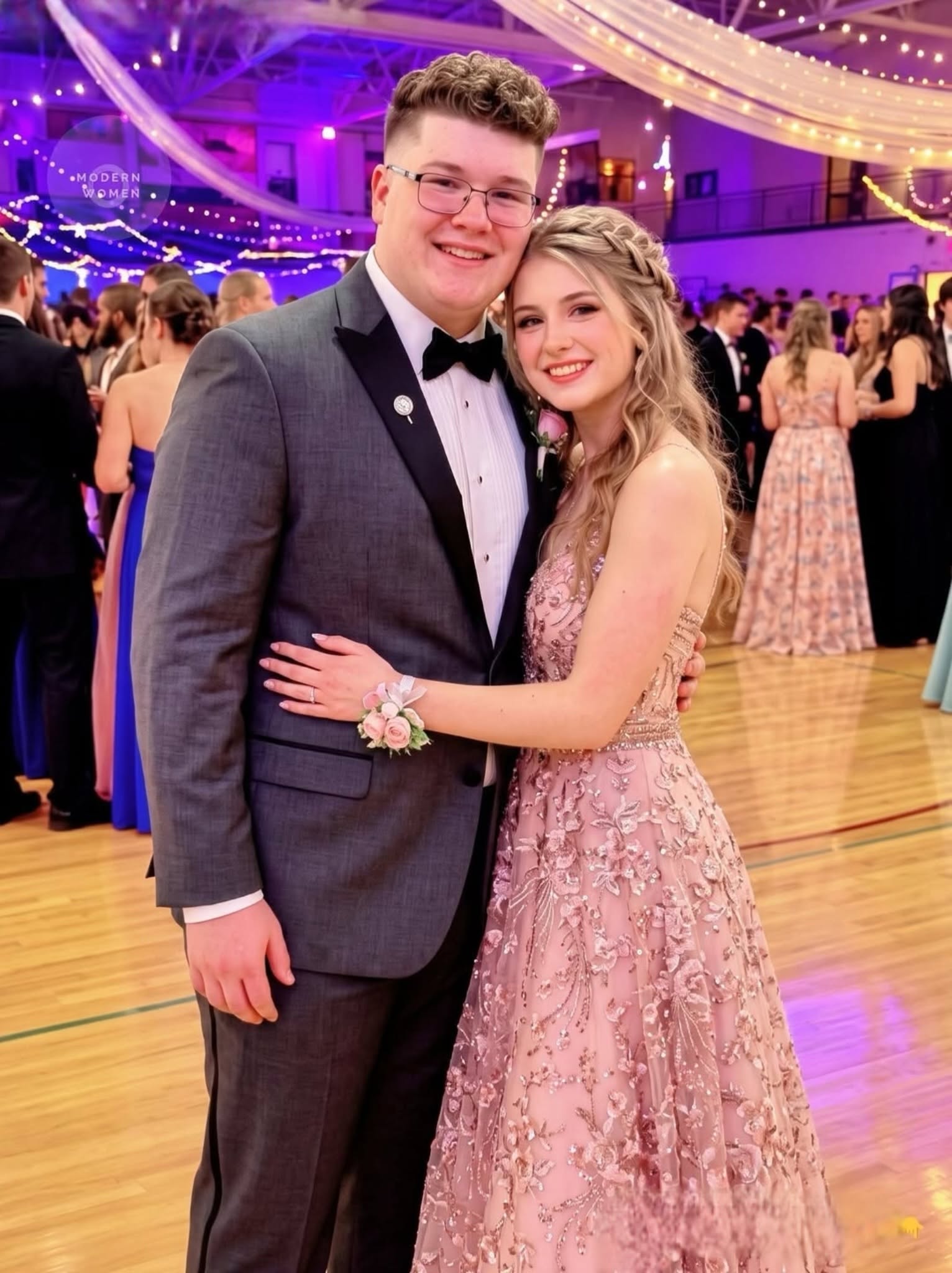
The Moment the Room Went Quiet
The students who had been laughing began to look confused. Brielle, who had expected the prank to keep going, tried to cover her nerves with a laugh.
“What are you doing?” she asked.
Mason did not raise his voice. He did not insult anyone. He simply spoke about what it feels like to become someone else’s entertainment.
He said he knew some people thought the night would make a funny story to share online. He also reminded them that the person being laughed at still had to go home with the memory of it.
As he spoke, a few students lowered their phones.
Then the projector screen behind him changed.
At first, some people seemed to think it was part of the joke. But the room shifted as they realized what was on the screen: messages, screenshots, and recordings from previous years that showed what Mason had been dealing with at school.
It was not an attempt to expose private lives. It was not revenge. It was a record of the kind of behavior many students had dismissed as harmless.
And suddenly, the prank did not feel funny anymore.
What Mason Wanted Everyone to See
Mason told the room he had spent a long time wondering what was wrong with him. He had wondered why being different seemed to give other people permission to hurt him.
Then, he said, he finally understood something important.
“The problem was never that I wasn’t good enough,” Mason said. “The problem was that some people thought kindness only mattered when it was convenient.”
The principal, who had been standing near the back of the gym, walked forward. But he did not interrupt. He stood quietly and listened.
Mason explained that he had made the presentation because he wanted people to understand what happens after the joke ends. The person being embarrassed still remembers it. They replay it. They carry it longer than the crowd ever realizes.
“I don’t want revenge,” he told them. “I just hope someday you understand that making someone feel small doesn’t make you bigger.”
For the first time that night, Brielle looked uncomfortable. Not because the prank had failed, but because the meaning of it had become impossible to ignore.
Then another student stood up and admitted he had laughed earlier. He said he had not thought it mattered.
The room that had been loud with laughter moments before was now filled with something much harder to face: honesty.
Why This Matters
Mason’s prom night became more than one painful moment. It showed how quickly cruelty can spread when students treat embarrassment as content, especially when phones and social media make it easy to record and share someone else’s worst moment.
It also showed the power of evidence, timing, and restraint. Mason did not try to humiliate anyone back. He used the moment to make people see the impact of their actions.
Afterward, Mason walked back toward his mother with a kind of confidence she had not seen in a long time.
“I spent years letting them decide who I was,” he said.
Then he looked toward the empty dance floor.
“I figured tonight was the night I decided for myself.”
A few weeks later, Mason shared another update. The school had started a student project focused on kindness and respect. Some students who had once ignored him began speaking to him. Not every apology erased what had happened, and not everyone suddenly became close to him.
But something had changed.
Mason had reminded everyone in that room of a truth they should not have forgotten: a person’s worth is not decided by how others choose to treat them.
Years later, Mason would not remember prom as the night a cruel prank defeated him. He would remember it as the night he stopped hiding.
Sometimes the most powerful response is not walking away. It is standing still long enough for people to finally see you.